BARCELONA – Go anywhere in the world, and an agricultural mess awaits. Even here in Catalonia, an autonomous self-governing region in northern Spain bordered by the Pyrenees mountain range and glorious Mediterranean beaches.
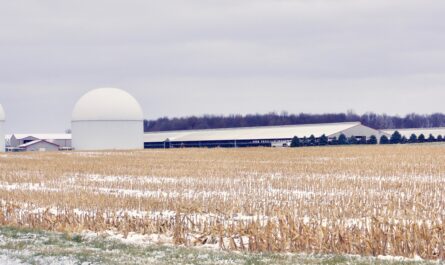
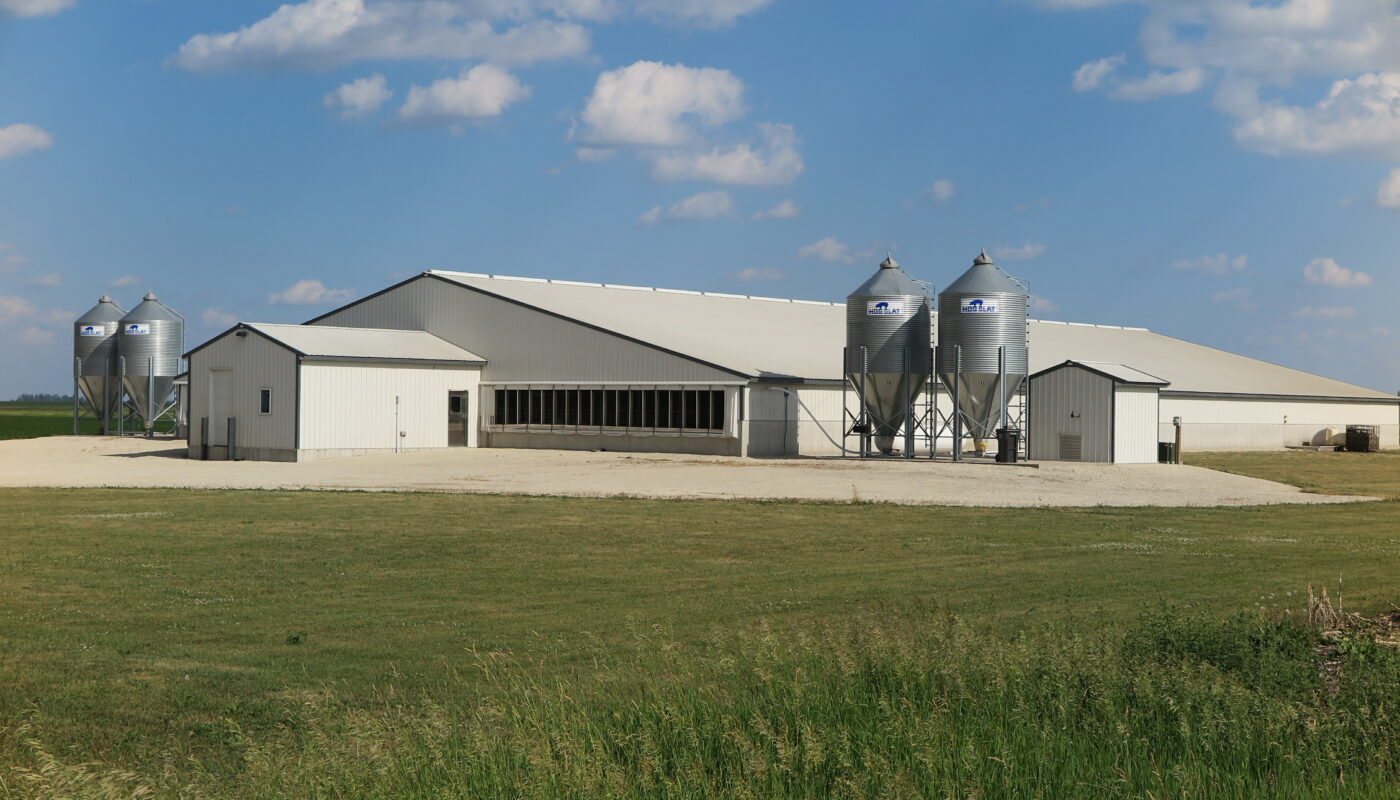
Catalonia, it turns out, spent two generations developing industrial farm practices that turned it into a hog haven. With 8 million hogs, it is the largest producer in Spain, which itself is Europe’s largest pork producer.
Readers of Circle of Blue know that such intense concentration of hogs, and the millions of tons of liquid manure they produce annually, means big trouble for water quality and human health. Manure sprayed as fertilizer saturates Catalonian farm fields. Nitrogen in manure converts to nitrate in the presence of oxygen, and easily finds its way into Catalonia’s streams and aquifers.
In the basic details about hog production and its environmental consequences, Catalonia looks a lot like Iowa, America’s leading pork producer. Catalonia and Iowa farm authorities justify the surpassing speed and scale of industrial hog production as a benefit for regional economies and farm employment. In both places, tens of thousands of people are involved in the work of grain production, husbandry, animal health, processing, transport, marketing, and export. And that’s before the finished product hits grocers, restaurants, and households, not to even mention the complexities of where all the waste goes and how many thousands of people are involved in that lurid enterprise.
But here’s the serpent in the garden. Neither region, nor their national governments, took into full account the serious consequences to water quality of raising so many animals indoors – that is, until wells and streams and lakes and rivers were thoroughly poisoned by nitrates. And it’s the same story almost everywhere on Earth that industrial agriculture is practiced.
Nitrates discharged from nutrient-saturated farm fields and from animal confinement facilities are now America’s biggest groundwater pollution concern, according to a U.S. Department of Agriculture survey of resource management agencies. Same in Spain, where hog and other livestock and poultry production is responsible for most of its nitrate contamination. A report from Greenpeace found nitrate pollution in Spain increased over 50 percent in just four years from 2016 to 2019.
The U.N. World Water Development Program declares nitrates from agriculture are the most common chemical contaminant in the world’s aquifers. The prevalence of nitrates in streams, rivers, lakes, and coastal waters also is causing harmful algal blooms and harming aquatic ecosystems. In 2011, the World Resources Institute found 479 sites globally experiencing low-oxygen conditions triggered by excess nutrients in the water.
It’s a problem. A serious problem. Because nitrates are dangerous. At high doses, they can be lethal to infants. Science has also shown that long-term exposure in drinking water is linked to thyroid disease and colorectal, bladder, and breast cancers.
The European Union’s safety limit for nitrates in drinking water is 50 parts per million, five times higher than the 10 ppm limit set by the U.S. Environmental Protection Agency. Even with that excessive target, the Catalan Water Agency found nitrate contamination exceeded the limit in 17 of the region’s major aquifers. More than 3 million of the region’s 8 million residents are affected. Nitrates also contaminate most of Catalonia’s rivers, including those that are the primary sources of drinking water for Barcelona, the capital. A separate study by the Spanish health ministry found that three out of 10 Spanish groundwater monitoring stations registered nitrate levels close to or exceeding the 50 part per million safety limit.
There was a period in our recent past that industrial nations acted to limit the damage from such a profoundly dangerous chemical compound. Following the discovery of buried industrial wastes at the Love Canal in 1977, for instance, the United States enacted a flurry of new legislation to clean up toxic dumps across the country, manage chemical waste disposal, restrict the use of existing chemicals, oversee the safety of new chemicals, and prosecute and fine violators. For a time in the late 1980s and early 1990s toxic chemical oversight was responsible for the majority of all spending that the federal government made to protect the environment. The result has been cleaner water, clearer skies, safer communities.
No such deliberate and effective strategy has emerged to oversee and limit discharges into water or air from agriculture, now the largest polluter on Earth. The industry has largely evaded mandatory government restrictions for its wastes. The U.S. Congress specifically exempted agriculture from virtually all the pollution controls in the 1972 Clean Water Act.
The European Union tried something different. In 1991, recognizing the increasing threat from farm pollution, the EU established the Nitrate Directive for Spain and 26 other member countries. The requirements seemed far-reaching, including instructing countries to designate vulnerable lakes, rivers, streams, and aquifers and prevent them being contaminated with nitrates.
The EU also directed countries to actively monitor nitrate concentrations in surface and groundwater and to do what is needed to reduce them. In 2020, the EU updated the approach with a “Farm to Fork” strategy that called for slashing nitrate pollution by at least 50 percent by 2030.
But the directives contain a fatal flaw. The EU strategy for limiting nitrate contamination is based on the same standard operating procedure embraced by the U.S.: convincing farmers to voluntarily clean up their acts.
The approach has never been shown to be effective, either in Europe, the U.S., or almost anywhere else. The increasingly dismal details appear every four years in reports the EU prepares on how member countries are performing with their nitrate-reduction programs.
The latest assessment in 2021 describes how nitrate contamination is getting worse. The report’s authors concluded that “in spite of considerable efforts from most Member States and farmers, which respectively designed and applied measures mitigating nitrates losses in waters, the water quality data show that the level of implementation and enforcement are still not sufficient to reach the objectives of the Nitrate Directive, 30 years after its adoption.”
Spain has been particularly inept in addressing farm-related nitrate discharges. In 2021 the European Commission, the EU’s executive branch, referred Spain to the EU Court of Justice for failing to take sufficient action against nitrate pollution in its waters.
In March 2024, the Court of Justice found Spain guilty of neglecting its obligations. The court alerted Spain that it faces further penalties for continued non-compliance. Spanish authorities responded to the EU court decision by stating it is “working with regional authorities to implement the necessary measures.”
In at least one region, Galicia, in northwestern Spain, citizens regarded that assurance as insufficient. They brought suit in March 2025 in the High Court For Justice against the regional government for allowing so many hogs to pollute their water and violate their human right to live free of body-bending odors and insidious water pollution. It was the first time a European Court considered how confined animal livestock production affected water and human well-being.
In July 2025 the Court found in favor of the citizens. The justices ruled that 20,000 residents had their fundamental right to living in a healthy environment had been violated by toxic discharges from hog production facilities. The Court ordered the regional government to take immediate action to eliminate odors and environmental degradation.
In such landmark public interest cases, the end is never quite as straightforward as it should be. The Galician regional government said it intends to appeal the ruling to the Spanish Supreme Court.
But nonetheless, in condemning regional authorities for advancing industrial farm interests ahead of water quality, health, and human well-being, a prominent European Court stood on the side of citizens. The case is an essential public-interest breakthrough. It likely serves as a trend-setting model for other communities in and outside Spain to pursue similar litigation. And it serves as proof that citizens have the power to compel governments to halt nitrate discharges that are so dangerous.
— Keith Schneider