Archive for the ‘Agriculture’ Category

I Wish, I Will

Sunday, September 30th, 2007

tutu.jpg 

NEW YORK — The three-day Clinton Global Initiative concluded with a flurry of new commitments including a five-year, $4 billion pledge by Pacific Gas & Electric and Ausra to build solar thermal generating stations that both companies says is cost-competitive with fossil fuel generation. California-based Ausra will build at least 1,000 megawatts of solar power plants and PG&E will purchase at least 1,000 megawatts of solar thermal, and the deal will eliminate over 36 million tons of CO2 emissions in California and neighboring states over the next 20 years. Other projects announced here were these:

  • FourWinds Capital Management said it will invest $300 million to develop investment programs that focus on planting, harvesting, and processing of novel sources of bio-fuels using emerging technologies in tropical regions that offer significant environmental and social benefits in addition to alternative energy sources. The investment company also said it would develop a $1 billion global investment program to assist large cities and rural areas in improving their environmental infrastructure, with a particular focus on waste and water management systems.
  • Geothermal Power Company of Iceland committed to spending $150 million to help countries in the African Rift Valley develop geothermal energy resources. The project will invest in comprehensive research into the geothermal potential of Djibouti, and if successful, will build a large power plant driven on geothermal power.
  • Sea Studios Foundation, a Monterey-based documentary film production company, will produce a $16 million integrated media initiative to help audiences understand the connections between seemingly unrelated problems-and solutions-in global health, poverty, climate change, and the environment. Using television, the Internet, and new media, the studio’s “Strange Days on Planet Earth 2020″  series will include periodic primetime television events featuring Edward Norton; an interactive Web site hosted by PBS.org, an iTunes video Podcast series, ongoing “Search for Solutions” contests to foster user-generated content and showcase high-impact opportunities to make a difference, and live screening events involving the public, business leaders, opinion leaders, and policymakers.
  • The Apollo Alliance, the City of Newark, and the Center for American Progress committed to organize Newark’s Green Future Summit in the Spring of 2008. The idea is to identify best practices and mobilize the resources to help Newark catch up with Chicago, Portland, Seattle, New York and other cities that are showcases for prosperity that emerges from developing a clean energy-efficient, green economic development strategy.

These and more than 200 other commitments announced this week were said by President Bill Clinton to touch “at least 100 million people worldwide.” The scope and numbers are stunning, even if half of what was announced here this week is actually executed. Mr. Clinton asserted that nearly 10 million children not in school around the world will enroll for the first time. Some 50 million people will gain access to treatment for neglected tropical diseases. Some 170 million acres of forest will be conserved and restored, an area equal in size to Italy and Switzerland combined. And 11 million adults, most of them women, will gain access to industries and durable jobs.

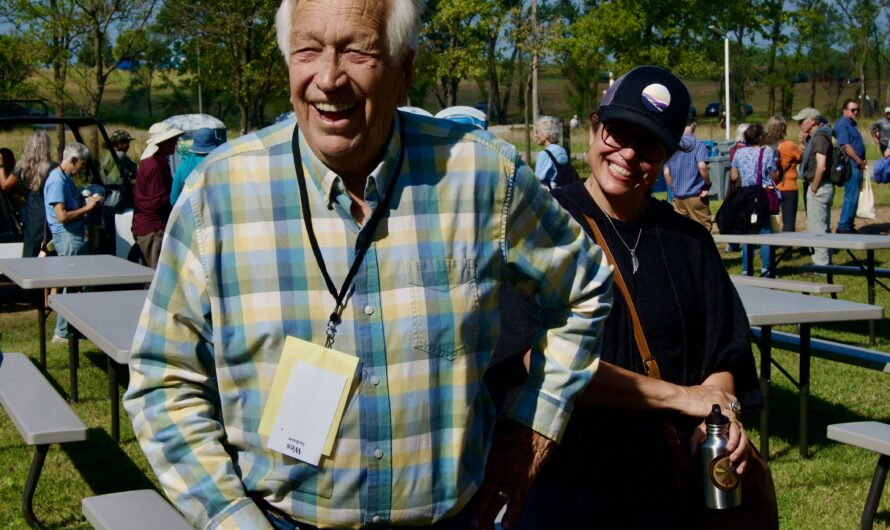
I wasn’t the only observer who found the proceedings disorienting. There really isn’t anything quite like this conference anywhere on the planet. The Aspen Ideas Festival convenes a similar array of prominent thinkers and voices. The World Economic Forum is much larger and, I’m told, more perceptive and far-reaching in its choice of subjects and how far it asks panelists to advance their thinking. The United Nations, which also convened in New York last week, attracts more global leaders. But none of these, nor any other international conference, does as well in attracting such diverse leaders, such as Archbishop Desmond Tutu (see pix). And none is motivated so clearly by one person seeking to make the world a better place and successfully making the ask so that not $millions, not $billions, but that something close to $10 billion is committed by individuals, companies, governments, and foundations to execute an incredible array of worthy projects. More was done to help solve the global warming crisis in these three days than the United Nations or the United States has done in half a decade.

Several more big ideas of the 21st century are at work here. The first is that important industrial companies, particularly those in pharmaceuticals, energy, utlitities, and online media see the value of reducing human and global stress to improving their bottom lines. There’s money to be made in solving misery, not only in the development and delivery of new products, but also in fostering collaborations that help companies gain access to new global markets. The second big idea, one that is becoming Mr. Clinton’s signature in this phase of his life, is the value of what he calls “giving back.”  He frames this in the context of the difference between I wish and I will. There were a lot of willing people in New York last week. 

Michigan’s Energy Schizophrenia

Thursday, September 6th, 2007

miscanthus_harvesting1.jpg

Late last month I had the chance to spend the day with scientists at Michigan State University who are involved in carrying out the work of the new Great Lakes Bioenergy Research Center, a partnership between MSU and the University of Wisconsin financed by a five-year, $125 million federal research grant. It is one of three such centers across the country determined to fill America’s national gas tank with fuel made from plants. Bruce Dale, a chemical engineer at MSU and one of the campus leaders on this topic, told me he’s convinced that “we can replace all of our imported oil with liquid fuels produced from crops.”

Whether that is possible without causing shortages of staple crops, higher food prices, and serious unintended consequences to soil, air, and water is a source of considerable debate in and out of academia. But many respected authorities say it is, including the New York-based Natural Resources Defense Council, a national environmental organization, and the WorldWatch Institute, a global environmental research group based in Washington. A full account of how Michigan State has emerged at the center of biofuels research and development will be in the New York Times on November 7.   

But as I toured the genetic engineering labs, greenhouses, and the MSU crop and soil science farm I kept thinking there probably is no state in the country with such a powerful case of energy schizophrenia. 

Just check out what’s going on this state.

First, MSU has assembled a team of nearly 100 researchers and faculty members, spanning almost a dozen departments, to develop the basic science to produce new varieties of ethanol-rich crops, like switchgrass and miscanthus (see pix), new biological recipes to speed fermentation and enzymatic breakdown, new industrial processes to make the products of the nation’s new biorefineries cost-competitive with petroleum-based fuels. If Bruce Dale and his colleagues get this right, the bio-fuels economy will be much cleaner, more environmentally sensitive, and more economically productive, especially for America’s farm country.  Massachusetts-based Mascoma is so enthused about MSU’s prominence on biofuels science and development it announced earlier this year that it will build a plant here to convert wood wastes to ethanol, an expected $100 million-plus investment. 

Second, on Monday in East Lansing, Michigan State also is holding the first “Manufacturing and Developing Wind Energy Systems in Michigan” conference. More than 200 industrialists, utility industry executive, business leaders, policy specialists, researchers, and investors are expected to attend the two-day event. The intent of the conference is to stimulate the $20 billion global wind industry’s interest in settling in Michigan to design and manufacture generating equipment, and also to recruit companies to develop the state’s potential as a source of wind energy. The Department of Energy produced a wind map in 2004 that said Michigan was the 14th windiest state in the country, capable of generatiing enough electricity from wind as 23 new coal-fired power plants. The Land Policy Institute at MSU, which organized the conference, says that landowners also could benefit from thousands of dollars in annual leasing fees for every one of the big windmills they allow on their ground. 

And third, while MSU develops the science of clean energy, state utilities have proposed building at least six new coal-fired power plants in Michigan. In a state where mercury from coal has contaminated almost every inland lake, where the snow sports industry is melting away, and where citizens by a wide margin support renewable fuels that make the state more competitive and produce more jobs,  the last thing Michigan needs is to fuel its new economy with such a dirty source of energy. But that message isn’t reaching the state capital, where Governor Jennifer M. Granholm says she supports at least one new coal plant, and the Michigan Chamber of Commerce expresses skepticism about conservation, renewable energy, or any change in convention other than its steadfast promotion of every form of energy produced by its members in the fossil fuel industry.

Before Grassoline, Settling A Dispute Among Experts

Thursday, August 23rd, 2007

biofuelspump.jpg

David Pimentel, an ecologist who spent all of his career at Cornell University after earning his doctorate in entomology in 1951, is one of the most respected environmental scientists of his generation. He was among the select group of young ecologists who in the 1960s first identified the environmental and public health hazards of farm chemicals, and helped build the scientific case for healthier, more environmentally-sensitive agriculture practices. The fact that organic crops are the fastest growing sector of the American food production system owes a considerable debt to Dr. Pimentel’s scholarship and advocacy. Dr. Pimentel also has spent almost 30 years, ever since he chaired a federal Energy Department advisory committee  in 1979 that looked at the potential of plant-derived ethanol,  as the nation’s most important opponent of turning the might of American agriculture to fuel our cars.

Bruce Dale is a 57 -year-old chemical engineer who was born in Nevada, raised in Arizona, and is among the most decorated process scientists of his generation. After stints teaching at Colorado State University and Texas A&M, Dr. Dale joined the faculty of Michigan State University in 1996 to chair the chemical engineering department and prepare for the biofuels boom that he anticipated would emerge as petroleum prices rose to unmanageable levels. He is now the associate director of MSU’s  Office of Bio-based Technolgy, helping to coordinate an interdisciplinary team of scientists and social theorists that span more than a dozen departments at the nation’s second largest university. He also is  one of the five team leaders of the Great Lakes Bio-Engineering Research Center, a collaboration between MSU and the University of Wisconsin that earlier this year was awarded a $125 million, five-year grant from the Department of Energy to develop the scientific foundations for vastly expanding the American production and processing industry that is turning plants into transportation fuels.  

Over the last two years, almost unnoticed by the mainstream media but with increasing visibility in policy, industrial, capital, and scientific circles, Dr. Pimentel and Dr. Dale have been locked in a profound disagreement about the usefulness of producing fuel from plants. On the most basic human level, the strikingly different conclusions that these two eminent experts draw about the perils or promise of biofuels is the most personal high-profile scientific disagreement since the 1980s . During that era economist Julian Simon of the University of Maryland bet Stanford ecologist Paul Ehrlich that the prices of five key metals would either rise because of the trend to ever more scarce natural resources, as Dr. Ehrlich predicted, or fall because of innovation, as Dr. Simon said. In 1990, Dr. Ehrlich conceded defeat, an event that helped lay the intellectual foundation of the free market attack on American environmental laws as overly restrictive and pessimistic.

The expert disagreement between Dr. Dale and Dr. Pimentel rivals the earlier dispute in substance and significance. Dr. Pimentel’s analysis has influenced public opinion and the media, including this blog, with a penetrating critique of the environmental safety and economic wisdom of committing to a fuel production sector based on crop science, agronomy, and new processing technology. Dr. Dales asserts, though, that the Pimentel analysis is flawed in its basic construction. Those flaws, he argues, are impeding the progress of a vital sector in the green economy that promises to be much more environmentally sensitive to soil, air, and water even as it builds a new regional farm production and processing economy that will benefit rural America, and the Middle West in particular. To hear Dr. Dale tell it, generating the production capacity to fill tanks with what he calls “grassoline” could  be as essential to the Midwest’s new prosperity as the digital economy has been to the Pacific Rim states.

At the core of the discord is an analysis of how much energy it takes to make a gallon of fuel from ethanol versus how much energy that same gallon produces. Technical folk call this the “net energy” balance. Dr. Pimentel asserts that producing ethanol from corn yields a negative net energy balance, meaning it takes more energy to make a gallon of ethanol from corn than the energy produced. His calculations gained credence because of the energy intensive practices involved in growing corn — lots of irrigation, farm chemicals, fertilizers, and  fuel go into its production. Essentially, he argued, it takes as much energy to produce a gallon of ethanol as the energy that results. 

But more recently, Dr. Pimentel has made the same assertion about producing fuel from switchgrass and other crops that yield higher levels of biomass from which to produce ethanol, and can be grown with much fewer inputs.  Producing ethanol from switchgrass, according to MSU plant scientists, involves planting the crop once, applying no farm chemicals, and much less fertilizer than is used to produce corn, and harvesting the crop once a year.

Dr. Dale, meanwhile, argues that “net energy” critics are “dead wrong and dangerously misleading.”   Here’s why, he says. Producing a mega jule (MJ) of gasoline, a unit of energy measure, requires 1.1 MJ of petroleum, 0.03 MJ of natural gas, and 0.05 MJ of coal. The total fossil fuel input is 1.18 MJ per 1 MJ of gasoline or a – 18 percent net energy balance. Producing a MJ of ethanol, meanwhile, takes 0.04 MJ of petroleum, 0.28 MJ of natural gas, and 0.41 MU of coal, for a total fossil fuel input of 0.73 MJ. Thus producing ethanol, says Dr. Dale, yields a +.27 percent net energy balance, considerably better than gasoline. 

Corn ethanol also produces 18 percent less global warming gases than gasoline, says Dr. Dale. Ethanol made from switchgrass produces 88 percent less global warming gases, and its use would displace petroleum as a fuel source, reducing reliance on imported oil and all of the useful results that would confer on the nation. 

Settling this rupture is not about who’s right, but who’s wrong. If Dr. Dale is wrong, then pursuing the biofuels future he advocates would be irresponsibly expensive to taxpayers, cause enormous environmental damage, and do nothing to loosen the noose that rising oil prices and diminishing supply has wrapped around the nation’s neck. If Dr. Pimentel is wrong then a promising green economy that reduces environmental damage, shores up the Midwest’s flagging farm economy, curtails America’s dependence on imported petroleum, and fosters a new community-based green fuel production and distribution system could be seriously weakened by a public backlash predicated on faulty data.

Dr. Pimentel, in an email message to me this week, said, ”I am quite familiar with Bruce Dale’s arguments. I am sure you are aware that no one else supports his views on energy analyses. Some chemcial engineers have told me that that Bruce does not understand thermodynamics.”

Two years ago David Morris, a researcher and vice president of the Institute For Local Self Reliance, a respected public interest organization in Minneapolis, analyzed the “net energy” debate and in a widely-read report responded this way to the question about whether it takes more energy to make ethanol than is contained in ethanol: “In 1980, the short and empirical answer to the question was yes. By 1990, because of improved efficiencies by both farmer and ethanol manufacturers the answer was, probably not.  In 2005 the answer is clearly no.”

No doubt, I’ll be reporting more on this as we go along.  

Flip: Interactively Documenting Factory Farms

Tuesday, July 31st, 2007

 factory-farm-peter-rosset.jpg

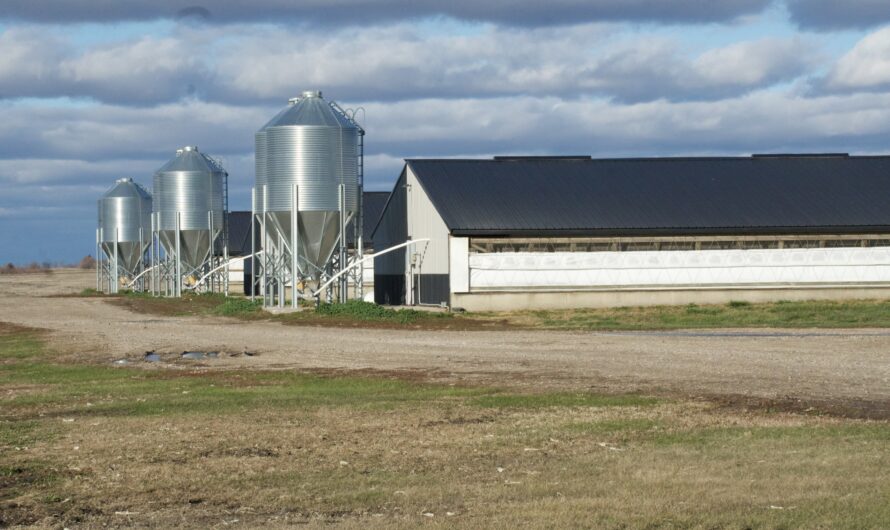
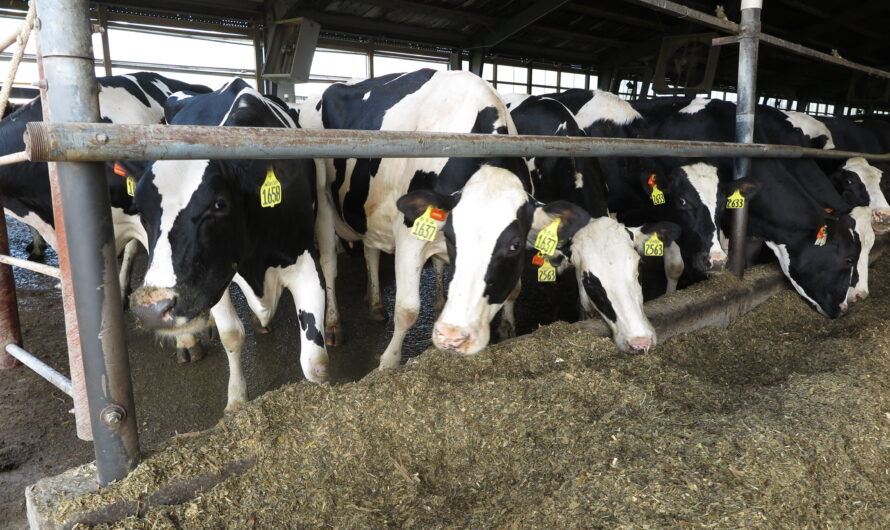
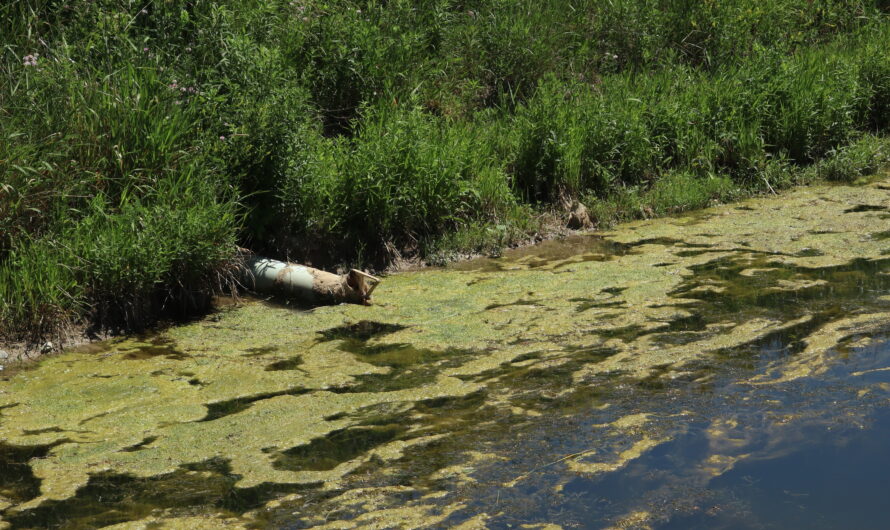
Among the priority hazards of joining capital and technology the way we do in the 21st Century is that it can blow up the ordinary and familiar — a farm, for instance — into shapes and sizes that are extraordinary. That is what’s happening in Michigan and in many other states in animal agriculture. American meat, poultry, and milk, increasingly, are produced on immense sites that have come to be known as “factory farms.” For those who haven’t followed this development, one problem is that confining huge numbers of animals produces quantities of manure that often exceed the levels of raw sewage produced by major cities.  A second problem is that neither the federal government nor the states require modern waste water pollution controls. Owners of factory farms, several of them multi-billion dollar food companies, have convinced state legislators they are mere farmers, unable to afford the settling basins, digesters, and filtration equipment that municipalities have used for years to clean their waste water. Instead they generally dump manure into smelly lagoons that inevitably leak and pollute the nearest stream or lake. 

In this edition of Flip, Mode Shift’s spotlight of useful applications of Internet technology, we draw your attention to the interactive Factory Farm Map, which details how many factory farms there are in the United States, and does so state by state, county by county, and sector by sector. The map, for example, can show you have many factory dairy farms there are in Barry County, Michigan (3), the number of factory hog farms in Allegan County (38), and how many cattle operations exist in Huron County (13). The Factory Farm Map is a genuine breakthrough in data gathering and presentation for a sector of the agriculture industry that is deserving of the pubic attention it is starting to attract. 

My organization, the Michigan Land Use Institute, has been interested in factory farms  since our founding in 1995.  Patty Cantrell, who wrote “Hog Wars,” a first-of -its-kind report on the subject while working for the Missouri Rural Crisis Center early in her career, brought that expertise to Michigan in 1998 and helped build the statewide campaign to limit the expansion of factory farms. Three years ago, Stephanie Rudolph, an intern from Haverford College then and now a graduate fellow at the Institute, reported on the worst of all factory farm polluters in Michigan, the Vreba-Hoff dairy farms of Hillsdale County. In 2004, Governor Jennifer M. Granholm’s administration brought sanctions against the farm that have curtailed pollution.  

The Factory Farm Map was produced by Food and Water Watch, a non-profit healthy food organization founded last year in Washington. The New York Times this morning noted the map’s contribution to the public interest in an editorial: “It’s important to read this map not as a static record of farm sites or a mere inventory of animals,” the paper said. “It is really a map of overwhelming change and conflict. It raises two of the fundamental questions facing American agriculture. Do we pursue the logic of industrialism to its limits in a biological landscape? And how badly will doing so harm the landscape, the people who live in it and the democracy with which they govern themselves?”

Two Conversations on Energy in America; and Everything Else

Wednesday, June 27th, 2007

You may have missed this little note out of Wall Street last week but many of the renewable and alternative energy funds are doing very well. The New Alternatives fund is up nearly 37 percent the last 12 months and 20 percent so far this year. The Guinness Atkinson fund is up 17 percent and 27 percent while the Wilder Hill funds, which launched last fall, are each up about 11 percent this year. By comparison, reports CNN, the S&P 500 has climbed about 21 percent over the last 12 months and is up about 5 percent this year.

The surge in renewable funds is part of a much larger two-path conversation happening on energy in the United States. At the grassroots, and in the investment portfolios of folks with a little dough there’s a tremendously interesting discussion about what will replace fossil fuel in an era of climbing prices, escalating environmental contamination, and soaring temperatures. Over the weekend, for instance, 3,000 people and 120 clean energy vendors showed up at the second annual Michigan Energy Fair in Onekama, Michigan, which is about a driver and a three-wood long. From Vespa scoooters to hybrid vehicles of every make, to windmills and solar displays,  off the grid, and non-toxic energy efficiency, to design and architecture and much more, the energy fair offered a fine exploration of what’s available for an ordinary Joe to get tuned up to the new cost and supply realities of the 21st century. 

[youtube]pmlB3Dk8_gM[/youtube]

You may recall that Veep Cheney once called conservation “a personal virtue” that had no place in a national energy strategy. Like almost everything else out of the current administration, what nonsense. In fact conservation represents an authentic response to scarce oil and high prices, as well as to global climate change. In essence, many of the products for sale at the fair framed sipping rather than slurping as a virtue. The market and consumers will steadily move conservation and alternative means for generating energy to the top of the national priority, regardless of what political folk think. That was perfectly plain in Onekama.

The big question is whether the elected leaders at the state and national level will catch up. That is not at all assured. Just before the Michigan Energy Fair got started the U.S. Senate approved an energy bill that significantly raised fuel mileage standards in cars and light trucks for the first time since 1975. The lawmakers also approved subsidizing 36 billion gallons of ethanol production at 51 cents a gallon. There was no new incentive for renewable energy, no shift from fossil fuels to clean sources, and fortunately no spending to turn coal into fuel, which is what the Nazis did in World War Two.

How much of the Senate bill will stick? Probably not much. The Michigan House delegation is determined to blow up the mileage standards, saying it threatens the domestic vehicle manufacturing industry. The industry has been dying for 30 years, so you have to wonder about that one. The Japanese don’t mind the higher standard. They’ve already reached 35 miles per gallon in Europe. And don’t be surprised if the coal boys in the South, West, Midwest, and mid-Atlantic somehow convince taxpayers to shell out billions to turn black rock into liquid diesel-like fuel. It’s a grim world when the grassroots go one way and the elected state and federal officials go another. Something about that campaign finance reform we ought to take a look at. 

Flip: Markets Are Key To Farmland Conservation

Saturday, June 9th, 2007

Here’s a great example of how to deploy Internet technology and interactivity to conserving farmland. The Michigan Land Use Institute just posted the latest version of our Taste The Local Difference Web site, which links buyers of local farm products to sellers. Here’s a new facet of the site that enables wholesale suppliers and buyers to connect very quickly on the Web, an online wholesale market as it were.   Just great work by the Institute’s Entrepreneurial Agriculture Project and our Web producer, Doug Rose. Nice job guys. 

Big Green’s Silent Spring For Rachel Carson — Take Two

Thursday, June 7th, 2007

american-robin.jpg

On the day late last month that Rachel Carson would have turned 100 years old I posted a piece on Mode Shift that focused on the surprising failure of the nation’s major environmental organizations to defend the mother of modern environmentalism. The free market right has set out on a deliberate path to diminish Carson, and by extension the American environmental community, as credible in responding to the consequences of industrial technology. The attack on Carson is an important facet of the free market right’s campaign to diminish the reach of local, state, and federal safeguards. And it’s been remarkably effective and destructive. The federal government, for instance, has no strategy for responding to global climate change because of its sympathy to free market assertions that the science of climate change is deeply flawed.  

In any case on Tuesday this week John Tierney, an influential free market science writer and columnist at the New York Times, leveled a broadside at Carson in the pages of Science Times. Calling Silent Spring a “hodgepodge of science and junk science,” Tierney accused Carson of using “dubious statistics and anecdotes (like the improbable story of a woman who instantly developed cancer after spraying her basement with DDT) to warn of a cancer epidemic that never came to pass. She rightly noted threats to some birds, like eagles and other raptors, but she wildly imagined a mass ‘biocide.’”

I know Tierney and worked with him at the Times in the early 1990s, when he joined the paper. He’s smart, thorough, and delights in being a contrarian on environmental issues. He wrote a famous piece questioning the value of recycling, essentially saying that recycling wastes more energy and materials than it saves. In another piece for the Times Magazine, Tierney singlehandedly changed the public’s view of Stanford biologist Paul Ehrlich when he reported on a bet that Ehrlich made with Julian Simon, an economist at the University of Maryland. In 1968 Ehrlich published The Population Bomb, which predicted a runaway global population boom (he was right on that) and mass starvation globally and food riots in the United States in the 1980s (he was wrong about that).  Ehrlich bet that the prices of five key metals would rise as a result of population increases and scarcity of natural resources. Simon bet that innovation would drive prices down. In 1990, Ehrlich conceded defeat and sent Simon a check for $576.07, the amount that represented the decline in the metals’ prices after accounting for inflation, he reported.

Now Tierney is after Rachel Carson, using as the basis of his critique a 1962 review of Silent Spring in the journal Science written by I. L. Baldwin, a professor of agricultural bacteriology at the University of Wisconsin. Baldwin’s review was the subject of debate as intense at the time as Carson’s ground-breaking journalism. Her assessment of the toxic trail left by pesticides in plants and animals was defended and confirmed then by independent scientists, some of them working at the behest of President John F. Kennedy. And they’ve been reconfirmed time and again in the real world since.

Pesticide use has resulted in mass killings of songbirds and wildlife, and the poisoning of farm and industrial workers. I personally reported on the consequences to production workers in Lathrop, California in the 1980s who were left sterile because of their exposure to the pesticide DBCP during its manufacture. I reported on the incidence of young children who’d been born deaf in a California community where the drinking water supply had been contamined by DBCP and other toxic farm chemicals. 

I tracked through the forests of western North Carolina in the early 1980s, identifying uncommon rates of death and illness in communities exposed to the defoliants 2,4-D and picloram, which were used to kill broad-leafed trees. The mix of 2,4-D and picloram, by the way, was sprayed in Vietnam, was known as Agent White, and was used to clear forests where Agent Orange didn’t work. A military study of the effects of Agent White, which I found in the library of Auburn University in Alabama, said that Hmong tribes exposed to the defoliant displayed levels of cancer and birth defects far in excess of neighboring communities that weren’t exposed. 

So you can’t tell me that Rachel Carson’s reporting inspired “chemophobia” as Tierney charges, or is exaggerated or untrue. What he does is focus the knife edge of an eloquent rhetorical attack on the outer membrane of Carson’s reporting, such as the predictions she made that haven’t come to pass — a big loss of robins, for instance. He doesn’t note that such a prediction might well have come to pass, and fortunately hasn’t, because several of the most toxic compounds she critiqued, especially DDT, have been banned for agricultural use. 

I appeal again to the major national organizations to get involved in setting the record straight about the value of Carson’s journalism and scholarship. Their credibility and the salience of the environmental movement’s science is at stake.

Pangea’s Biodegradable Package; Just Plant and Grow

Wednesday, May 30th, 2007

Here’s a name worth paying attention to in the space where sustainable business practices and the non-profit sector cross. He is Joshua Scott Onysko, a 30-year-old native of Rhode Island who turned a bonding experience with his mother making organic soap into Pangea Organics, a very successful Boulder-based manufacturer of organic body and skin care products. I first learned of Onysko and Pangea Organics from a friend in Saugatuck who was as enthusastic about the company’s all natural French Rosemary with Sweet Orange facial toner as she was about the box it came in. The package contained Genovese Italian sweet basil seeds embedded in the 100 percent post-consumer moulded fibre. The compostable box is designed to be moistened and planted. Two to three months later sweet basil will sprout from the seed bed.

Not only is the idea and execution of a plantable package just totally cool, it also indicates a facile business executive who is dialed into his customers’ values, as well as global market trends. I made a couple of calls, knocked around the Internet, and discovered that Onysko, who says he never gained a formal education, even as a grade schooler, is quite the instinctive entrepreneur who knows his way around a growing business. He also views himself as an agent of social change and is using the revenue and profits of his growing $2 million, five-year-old company to build the Pangea Institute, a non-profit devoted to teaching business executives how to be more environmentally sensitive and economically sustainable. 

[googlevideo]-3146774489432915749&q=joshua+Onysko[/googlevideo]

His own company, he says, operates a 10,000 square-foot manufacturing plant that is completely wind-powered. None of his employees earn less than $12.50 an hour, and receive generous health, dental, and eyecare benefits. Pangea employees manage a 3,000 square- foot organic garden that produces food that an onsite cook turns into a daily lunchtime feast. His line of soaps and other skin and body care products, Onysko says, supports 40,000 acres of organically grown oils and other crops around the world, much of it produced by women. 

The neat compostable package with embedded basil seeds was developed by UFP Technologies, a 44-year-old maker of custom packaging based in Georgetown, Massachusetts. UFP Technologies described its cutting edge package this way: ”Molded Fiber, a division of UFP Technologies, manufactures the customised shells, which are made from 100% recycled paper fibres and offer a cost-effective, environmentally friendly alternative to petroleum-based packaging materials. Pangea Organics recently redesigned packaging for its entire product line, and UFP Technologies provided recycled moulded fibre for a visually appealing packaging solution.”

It’s just this kind of union between a bright young entrepreneur intent on making things better, and a mainline technically savvy manufacturer willing to be inventive that is the essence of the Mode Shift we’re seeing in business, communities, and in peopleorienting their lives to respond to the powerful market forces that are reshaping the world.

No More $125 An Acre Stuff

Thursday, February 8th, 2007

bill-bobier.jpgBill Bobier, who’s a progressive Republican from Oceana County on Michigan’s west side, once represented four Lake Michigan counties in the state Legislature. At the time, in the mid-1990s, he was one of the rare good guys in a Legislature swinging so hard right that even Michigan Republicans didn’t recognize their own kind. What made Bobier especially distinctive was his farm, where he and his wife raised vegetables and beef. I once spent the day out there watching Bill fix his fences. We then sat for a few hours in his farm country kitchen talking about the agriculture economy. I remember him explain that every time the Michigan Department of Agriculture and the Department of Environmental Quality issued a new regulation to manage big growers, the first folks hurt were the small guys.

Bill brought the same message to the Seeds of Prosperity conference today. Oceana County has emerged as one of the centers of agricultural innovation in the Midwest. Apple growers over there, for instance, developed the quick fresh-freeze and packaging process that became McDonald’s popular Apple Dippers. The county’s asparagus growers figured out how to market their fresh frozen products to Wal-Mart and other food retailers. 

Since leaving the Legislature, Bill spends most of his professional time in Lansing, where he has an office across the street from the Capitol, and lobbies on farmland conservation and agriculture. The small farm, one of Michigan’s important employers, is as critical to the state’s economy as any small manufacturer, he argues. Maybe more so at this point as Michigan sheds manufacturing jobs by the tens of thousands a year. Still, the Department of Labor and Economic Growth, the business recruitment agency, keeps falling over itself to recruit small manufacturers. DLEG does very little to promote agriculture or small growers.

It’s another example of 20th century thinking that needs updating. In fact, there are few small manufacturers moving to Michigan or getting started here. There are many more small farmers, though, getting into business, especially in the Consumer Supported Agriculture sector which has grown up around the state’s big cities. 

Everybody eats, Bobier argues. There ought to be a way for the state to leverage the abundance of fresh food produced by small growers to build the regional processing, marketing, and distribution systems that make it possible for residents to eat fresh food, for farmers to gain prices worthy of their labor and skill, and for a much larger farm sector to employ thousands of people who earn living wages. We did it with widgets, said Bobier, and we ought do it with home-grown products that people really need. Fresh fruits, vegetables, dairy products, and meat. 

Michigan’s Great Farm Statesman

Thursday, February 8th, 2007

Every now and again you cross paths with someone who just vibrates differently than the ordinary Joe. It’s more than superior intelligence, or charisma, wisdom, energy, and experience. It’s how rare people draw those gifts together in a way that is so graceful and encompassing and fearless. A statesman, if you will. Michigan is in desperate need of more of these kind of people.

Michigan’s farm sector, fortunately, is graced by an authentic leader, a Nigerian-born agriculture economist named Soji Adelaja, who leads the Land Policy Institute at Michigan State University.  Early in his career Soji spent time on Wall Street, where he applied the  very same economic models used for attaining crop production efficiency to investment forecasting. He made his name at Rutgers, where he was a senior executive in the agricultural extension program, and among other things, developed New Jersey’s $1 billion farmland and open space investment fund.

soji.jpgMSU convinced Soji to move himself and his family to Michigan nearly four years ago, when the governor and Legislature seemed poised to enact pieces of a new smart growth development strategy that included conserving farmland and open space, strengthening cities, and slowing down energy- and money-wasting sprawl. Though Soji’s a nationally renown economist, at heart he’s really an accomplished public policy advocate who was convinced that Michigan was poised on the threshold of a new economic era based on better uses of land.

Not long after Soji arrived, unfortunately, the bottom dropped out of Michigan’s economy and instead of talking about how to rein in sprawl and smart growth the state conversation shifted to how to prevent decline. Like other advocates Soji retooled the message and suggested that Michigan’s competitiveness could be tied to how we treated cities and land, how we thought about food and farming, how reliance on a multitude of interlocking ideas instead of just one idea — auto manufacturing — could make the state’s transition much easier. Soji, in short, began to talk about prosperity. He was among the first to frame that big idea around leveraging Michigan’s agriculture sector in new ways. He spoke here today in his lovely Nigerian accent to some 300 food and farming specialists and advocates, arguing that good food grown and consumed in Michigan is as important to the 21st century as auto manufacturing was in the 20th. There was a time not terribly long ago when such a notion would have been considered so far from the mainstream as to be almost laughable. Not any more. In food, land, and good health lies the foundation of a durable economy that Michigan is desperate to develop.