Archive for the ‘Rustbelt Revives’ Category

In Civic Dispute Over Fracking, Lessons of Pragmatism From Previous Fights

Wednesday, April 3rd, 2013

20130403-151107.jpg

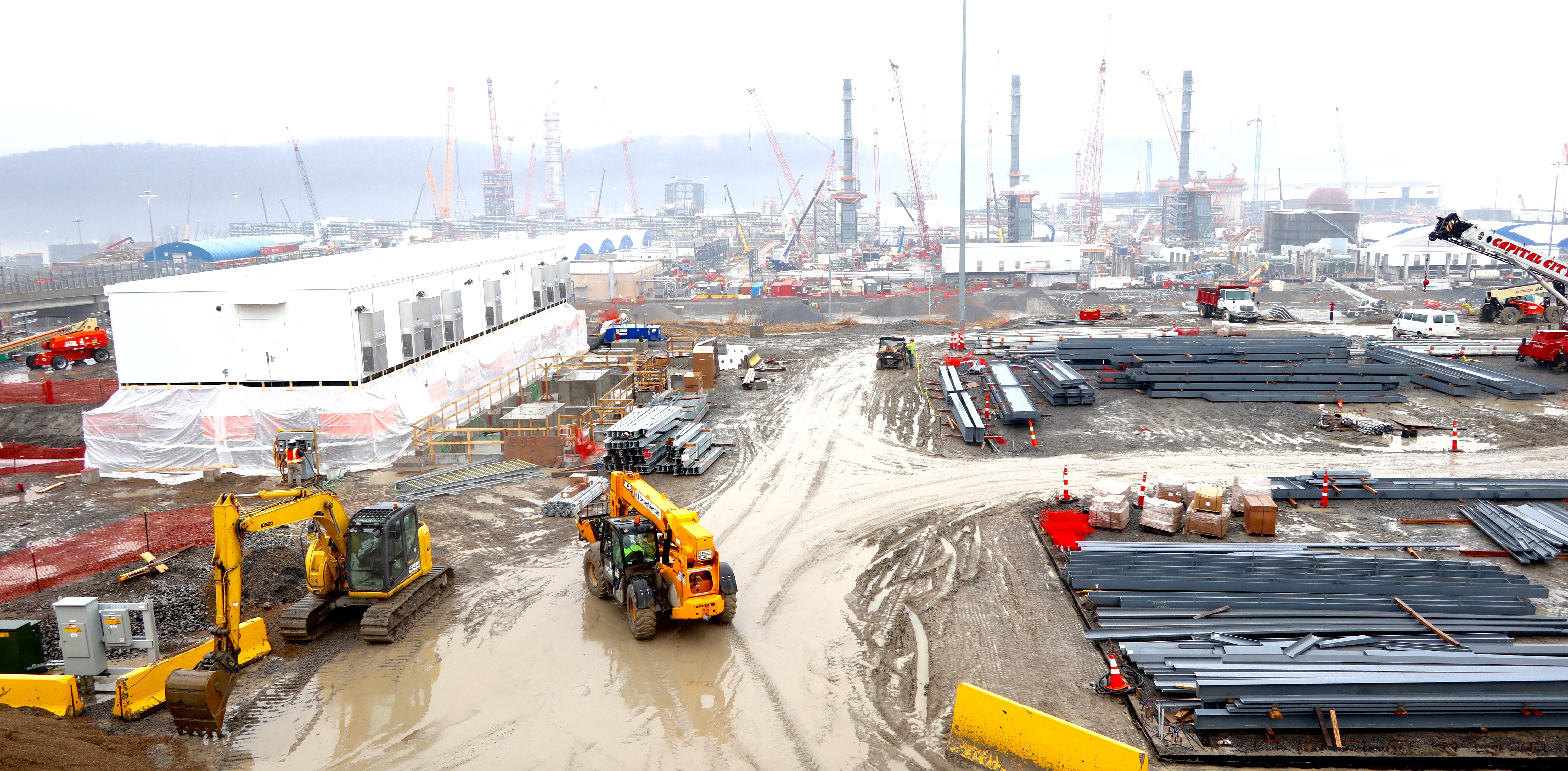
The economic benefits of deep shale gas development are becoming apparent, especially in Ohio where two new steel plants have been built, and three more expanded to serve the drilling and production sector. U.S. Steel’s new plant in Lorrain prepares drilling pipe for deep well development. Photo/Keith Schneider

Last month an 11-member collaborative – two foundations, five state and national environmental organizations, four energy companies — announced they had formed the Center for Sustainable Shale Development. The mission: to develop and implement drilling and production standards for shale gas that are environmentally safe and can be certified by an independent third party.

In essence, the new Pittsburgh-based center is seeking to do for the unconventional fuels sector what the U.S. Green Building Council did to significantly improve design, land use practices, and energy and water efficiency when it established the Leadership in Energy and Environmental Design (LEED) standards for building construction. LEED standards changed how commercial buildings are designed and constructed. They did so by establishing a market for innovation that is encouraged, expanded, and even enforced not by regulation but by buyers.

It’s too early to know whether the collaborative — which includes Shell and Chevron, the Environmental Defense Fund and Penn Future — will produce meaningful advances in production practices. But there’s no question, at least in my mind, that the center’s formation is a significant step toward much-needed political and social pragmatism in developing the nation’s ample shale energy reserves.

(more…)

More Evidence of Rust Belt Revival

Monday, March 25th, 2013

20130325-165920.jpg

An exciting architectural statement rises on the banks of the Ohio River in Owensboro, KY. The city’s convention center is scheduled to open next year. Photo/Keith Schneider

OWENSBORO, KY — When it’s completed next year, the 169,000-square-foot, $48 million convention center under construction in this city of 57,000 will arguably be the most striking architectural achievement on the Ohio River. With its angles and glass and cantilevered roof, the convention center dwells atop a high river bluff like a palace to the future. Which is almost precisely what it is.

Almost two years ago I first set foot in Owensboro to undertake a research project, What’s Done, What’s Next, to suggest new steps the city could take to ensure its prosperity and quality of life this century. I visited for a week a month from May 2011 to October 2011, releasing a study for Citistates that suggested achievable steps — like making it easier for women to participate as elected and civic leaders — that would strengthen the bones of a city that already was a pretty nice place to live and do business. I noticed straight away that the city’s elected leaders participated well with county leaders in pursuing projects of importance, like an $80 million tax increase to develop downtown Owensboro. The new tax was approved in February 2009, in the face of a deepening recession and in a region that had shifted from pragmatic Democratic Senator Wendell Ford to Tea Party conservative Senator Rand Paul.

Owensboro’s new convention center was paid for with those “prime-the-pump” public funds. Other public money went into a new five-acre riverfront park, streetscaping, and other infrastructure. That, in turn, prompted private investments, including the seven-story, 151-room Hampton Inn under construction next door to the convention center, a new office building across the street, and a 120-room Holiday Inn that’s planned for the downtown convention center district.

I also had the chance to travel along the Ohio River, reporting for The New York Times, Circle of Blue, and ModeShift on the surprising bounce in the economic step of a six-state river corridor that had been the belt in the Rust Belt. This month two more of those reports were published in the Times.

The first, a follow-up to a piece on Louisville’s big “wellness and aging sector,” described how Louisville’s wellness and aging companies are helping to design the next era of American retirement.

The second, a report from the Utica shale gas fields of Ohio, found that many of the nation’s biggest natural gas development, processing, and services companies are investing billions of dollars in the infrastructure to prepare and transport the state’s gas reserves to market.

I want to add a note here to ModeShift readers. It’s been too long since my last post in January. My schedule has been consumed with reporting on energy, food, and water from China, India, across the United States, Ontario, and Ohio. The results of that work will appear with more regularity here.

– Keith Schneider

A Cathedral to Beer in Pittsburgh

Monday, January 28th, 2013

20130128-171407.jpg

The Church Brew Works opened in 1996 in the then 94-year-old former St. John The Baptist Roman Catholic church, and has thrived ever since. Photo/Keith Schneider

PITTSBURGH — On the way to President Obama’s second inauguration last week we celebrated at the most confounding brew pub I’ve ever visited: The Church Brew Works. As an example of urban design serving and celebrating a new use, the pub is hard to beat.

First of all is the venue. The brew pub is in Pittsburgh’s Lawrenceville section, about 10 minutes from the golden bridges and glass towers of the city’s handsome downtown. The old church is easy to find on Liberty Avenue. But the entrance to the pub is deliberately inconclusive. No big entrance sign. No way-finding hints. Just a big 10,000-square-foot, 111-year-old red brick neighborhood church building with stout front doors and a dark vestibule.

Not sure where you are, you enter the vestibule, see the light coming through the small windows from the sanctuary. You carefully and slowly open the doors to a surge of crowd noise, soaring cathedral arches, a lighted pathway down the center leading straight to gleaming brew kettles set on a pedestal in a religious nave. It was like Oz. Every now and again you’re amazed by a place and exclaim, Holy Shit!

The Church Brew Works is one of those places.

The second reason to feel fortunate about The Church Brew Works is its beer and food. The menu ranges from pierogis to hummus, pasta to chops. The beer is great. Late last year the Brew Works won the Best Large Brew Pub award from the Great American Beer Festival competition, and its brewer was named “Brewer of the Year.”

The third feature of the Brew Works that intrigued me was how it defined its space and time — honoring beer, food, and good cheer in such a lavish and distinctive way. And how it seemed to defy religious convention. The church was built in 1902 and closed by the Diocese in 1993. The brew pub’s owner purchased the property for less than $200,000 in 1996.

The pub’s design incorporates the stain glass windows, much of the nave, and embraces the sedate colors and meaningful dark lighting of a Roman Catholic Church. The effect clearly meets at least part of its goal to glory, at least a little bit, in God.

It’s effective enough to shape popular views. There are more than a few of Pittsburgh’s Catholic residents who believe drinking beer in a former Roman Catholic Church is a sacrilege. I mentioned the Church Works to two Pittsburgh residents I met later that week. One said she never heard of it. The other, a restaurant owner in the city, said with a toss of the head that he’d never been to the place.

But the moral dimensions of the Brew Works also cultivates Catholics, and customers of other denominations, who spend their lives and some of their free time defying religious convention. The Church Brew Works does a good business and has since its opening 17 years ago.

– Keith Schneider

20130128-180440.jpg

The brew pub design incorporates the stain glass windows, much of the nave, the sedate colors and meaningful dark lighting of a Roman Catholic Church. Photo/Keith Schneider

Danger in Attacking China Is The Big Hurt It Would Put On US

Friday, September 14th, 2012

20120915-094427.jpg

China’s steady growth relies, in part, on its capacity to build new rail lines, a transportation option available here in Beijing and throughout the country. Photo\Keith Schneider

BEIJING — The Bureau of Labor Statistics, one of the U.S. government’s marvelous data gathering groups, has spents months making public facts about job and business growth that tell an unexpected story about the American economy. Two of the biggest generators of new jobs and rising incomes in the United States — the Great Plains and the Ohio River Valley — were regions all but given up for dead a generation ago.

The northern Great Plains in the 1980s became the focus of a proposal to transform millions of acres into a treeless wilderness “buffalo commons.” The Ohio River Valley was the site of epic dismantling of the country’s industrial manufacturing rust belt infrastructure.

In the last two years I’ve traveled and reported extensively from China, the Great Plains, and the Ohio River Valley. The three regions are tied to each other in ways apparent and distinctly possible only in the 21st century. And two of the regions — the Great Plains and the Ohio River Valley — would be grievously injured if the United States actually makes good on the rising chorus of threats, particularly from the Republican nominee, to pursue sanctions against China for alleged currency and trade infractions.

I write from China, at the start of my sixth trip here in 23 months. A little more than a week ago I was in Indiana and Kentucky. Late last year I was in North Dakota and Montana. In every one of these places there is new prosperity, new jobs, and new connections that are linked to China’s expanding economy, and especially to this nation’s rising demand for oil and for grain.
(more…)

Rust Rubbed Off Ohio River Valley, Narrative of Economic Revival in New York Times

Thursday, September 6th, 2012

20120906-095833.jpg

Luke Patterson, the 31-year-old pilot of the towboat Mike Weisend. Photo © Keith Schneider

PADUCAH, KY. – On a mile-wide reach of the Ohio River, just upstream from where it converges with the Mississippi, Ray McKinney, the 54-year-old first mate aboard the Mike Weisend, a year-old towboat, pounds the slack out of steel cables that lash 15 barges together in a long tow headed upriver.

The heavy pipe in his hands, and the tangle of cable at his feet are familiar equipment used by deckhands on the Ohio, a central artery of American commerce for nearly 250 years. But the load of cargo that the 6,000-horsepower towboat is readying to push upriver is not that familiar to McKinney and the eight other crew members aboard the big boat.

Instead of the usual load of coal, more than 25,000 tons of iron castings fill the barge holds. The towboat, essentially a floating locomotive, will push the 1,000-foot tow – three barges wide and five barges long — against the current for 400 miles to a steel plant in Ghent, Ky., about midway between Cincinnati and Louisville.

Business at the iron and steel foundries in Kentucky and Ohio is soaring. Vehicle manufacturers are ordering more steel. Steel pipe and steel construction equipment are needed to tap the deep natural gas-saturated shales of Ohio, Pennsylvania and West Virginia. The abundance of less expensive natural gas is encouraging construction of advanced manufacturing plants. General Electric, for instance, is in the midst of an $800 million program in Louisville to retrofit buildings to make new types of appliances. The company said it had hired nearly 900 workers this year and would hire several hundred more.

New supplies of natural gas also are helping to prompt utilities to replace power generated from coal-fired electric plants with newer, less polluting natural gas power plants. Coal mines are closing and less coal is being shipped on the river.

In other words, the iron castings are evidence of a seminal economic transition that is unfolding in the six-state Ohio River Valley, a region of economic revival that once encompassed much of what used to be called the rust belt. “The coal trade is way down,” notes Mr. McKinney, who’s spent more than 30 years moving bulk cargo on the Ohio River. “But we’re doing a lot more commercial cargo now. We’re seeing more steel, more rock, more cement. Somebody’s making money.” (more…)

In New York Times, Louisville’s New Growth Sector

Wednesday, July 25th, 2012


Along the Ohio River, a new center of job growth, a towboat hauls steel upriver. Photo by Keith Schneider

A new geography of economic growth is unfolding in places that few people anticipated even a decade ago. In my work on energy development, I’ve seen how the northern Great Plains quickly became a center of oil and gas development. The entire Great Plains has generated low unemployment numbers as a result of energy production and rising farm commodity prices.

I’ve also followed the trend into the Ohio River Valley, which is among the national leaders in job growth now. The rust is being scrubbed from the belt. I was in Paducah, Ky. earlier this month for the New York Times and will be writing here about what I found out about the region’s fast-modernizing economy from the pilot house of an Ohio River towboat.

Today, the paper published my article on Louisville, an entrepreneurial city, the largest along the 981-mile Ohio River, which has always been adept at understanding how geography, resources, and new markets can be turned into business opportunities.

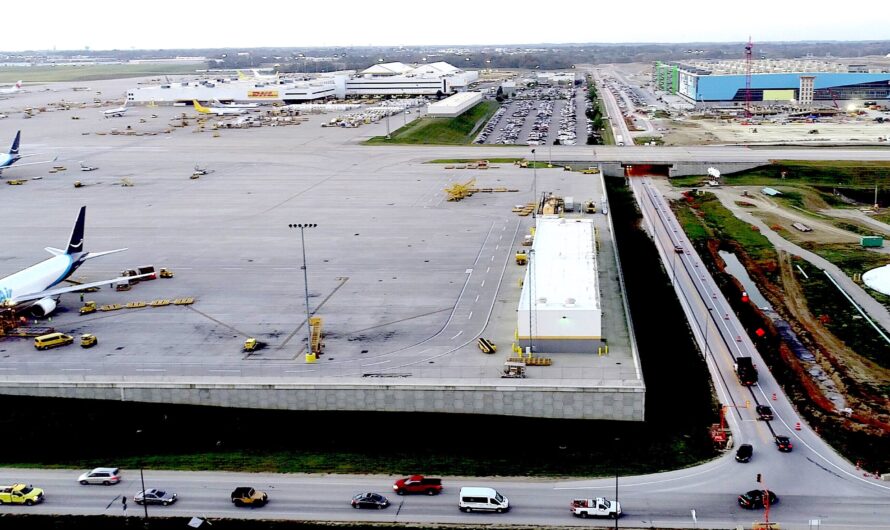
Good grass strengthened thoroughbreds that have competed at the springtime Kentucky Derby since 1875. Ample labor at competitive cost made Louisville a manufacturing center, led by Ford, which has kept big assembly plants open here since 1916. And the city’s location along the Ohio River, and near the continental center, turned Louisville into a transport hub, currently reflected in United Parcel Service’s state-of-the art package sorting and distribution center at Louisville International Airport.

Now an eight-story, 200,000 square-foot commercial office and laboratory building nearing completion in Louisville’s central business district signals the steady expansion of the city’s biggest new economic sector, devoted to what local development specialists call “lifelong wellness and aging care.”

See the article here.

– Keith Schneider


In New York Times, Cincinnati’s Riverfront Revival

Tuesday, June 5th, 2012

20120606-152125.jpg

CINCINNATI – The shoreline of this Ohio River city, which thrived in the 19th century with 30 steamboat visits a day and then died in the 20th as pollution and industrial disinvestment pushed people and businesses inland, is emerging again as a new hub of civic and economic vitality.

The New York Times published my article on Cincinnati’s riverfront development, more evidence of the Ohio River Valley’s new upward economic vector. The Times piece is a shorter version of this draft.

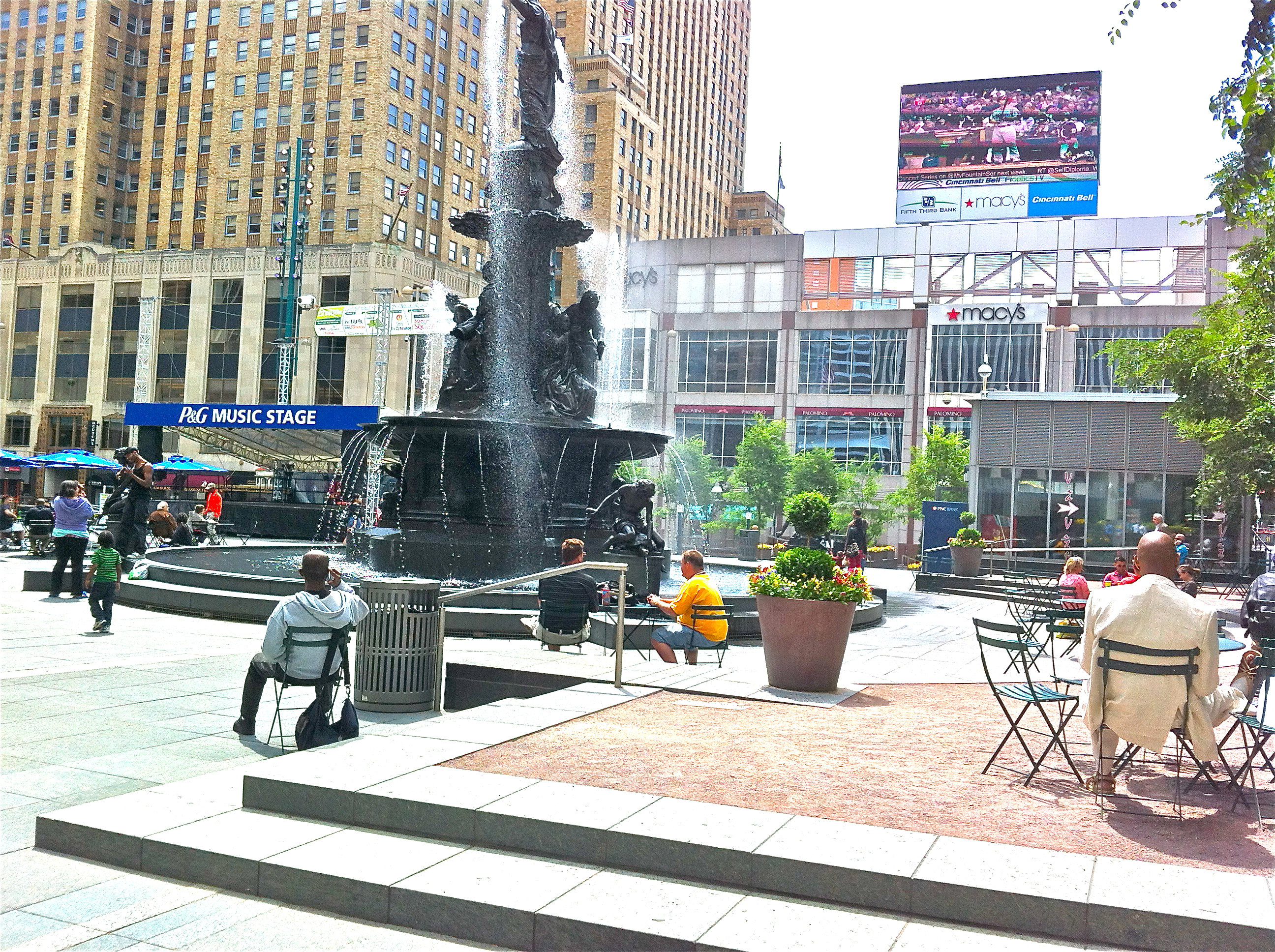
Last year, Great American Insurance Corp. opened a $322 million, 800,000-square-foot office tower close to the river that now rules the city’s skyline. Two blocks in front of the 41-story building, the city and Hamilton County are constructing a $120 million riverfront park. It steps up from the shoreline in successive tiers of grass and stone to meet The Banks, a $600 million, 18-acre mixed-use retail, residential, and entertainment development.

In addition, Rock Gaming is building a $400 million, 354,000-square-foot casino downtown that is scheduled to open in early 2013. And in February this year the city started construction on a $112 million, 2.6-mile streetcar line that will link Cincinnati’s business center, and historic Over-the-Rhine residential and entertainment district, to the new riverside park and The Banks.

“We’re seeing a new Cincinnati coming from all of this,” said Mayor Mark Mallory, a two-term Democrat elected in 2005.  “We have a new set of activities, new places to live, new places to work. We are investing in things that grow a city.”

Market Trends
Cincinnati’s economy and its capacity to attract new residents and jobs reflects several converging market trends. The University of Cincinnati, the city’s big public university, has significantly rebuilt its campus in recent years, attracting more students and national attention, and serving as the foundation of an expanding medical research and health services industry. A growing number of independent and innovative marketing and branding companies, many focused on online markets, are developing with the help and through various collaborations and partnerships with Procter and Gamble, the city’s consumer products mainstay. And upriver from Cincinnati, billions are being invested by the energy industry to develop deep shale gas and shale oil reserves, reviving the state’s steel industry, generating a new petrochemical sector, producing thousands of new jobs, and strengthening urban economies from Pittsburgh to Cincinnati.

Digging out from decades of disinvestment is no small goal for a river city that from its founding as a western frontier outpost in 1788 grew by 1950 into an industrial powerhouse of nearly 504,000 residents. But since 1960, as the metropolitan region expanded to more than 2 million people, and globalization drained manufacturing jobs, Cincinnati, which endured three days of riots in 2001, has been losing an average of 4,000 residents annually and median household incomes are well below the state and national averages.

Still, with 80,000 downtown jobs, Cincinnati’s business core is thriving. And with nearly 300,000 residents, 10,000 of them living downtown and now on the waterfront, Cincinnati remains the third largest city along the six-state, 981-mile Ohio River, behind Louisville and Pittsburgh. Like its bigger neighbors, and several smaller Ohio River cities including Marietta, Ohio, Owensboro, Ky., and Evansville, Ind., Cincinnati is experiencing a strong revival in urban core business and residential growth, much of it prompted by development along a scenic river that state and federal water quality data shows is cleaner and more ecologically vital.

On a bright blue afternoon, just the sort of day that prompted Alexis de Tocqueville in 1831 to describe this part of the Ohio River as “one of the most magnificent valleys in which man has made his stay, ” the full sweep of Cincinnati’s new development, clearly designed as the city’s gateway, comes into full view.

Construction workers laid stone walkways and new sod in the shoreline park. Alongside, on the upriver end of an 18-acre expanse of grass, walkways, new streets, and pocket parks are the first two buildings of The Banks that opened last year. They are sleek six-story brick and glass buildings, built at a cost of $82 million, that encompass 80,000 square feet of ground floor restaurant and retail space below 300 rental apartments.

The $78 million second phase of The Banks, which is being built by Carter, an Atlanta-based real estate investment firm, is set to begin construction next year. It consists of one more mixed-use building of similar size, a $25 million expansion of an underground parking garage, and the announcement this month that Yard House, a Los Angeles company, will construct a separate 11,000-square-foot restaurant.

Piece by piece, a new neighborhood is taking shape. It combines an old riverfront economic concept based on housing, entertainment, travel, and tourism with a new 21st century focus on the value of professional sports.

Located between the two phases of The Banks is the $110 million, 158,000-square-foot National Underground Railroad Freedom Center, which opened in 2004 and was visited in February by First Lady Michelle Obama. Flanking the entire development, to the east and west, are Cincinnati’s professional sports stadiums – the Cincinnati Bengal’s $455 million Paul Brown football stadium that opened in 2000, and the $337 million Great American Ballpark for the Cincinnati Reds that opened in 2003.

Tax To Support Investment
The construction of The Banks and the 45-acre shoreline park follows more than a decade of significant infrastructure investment along Cincinnati’s riverfront, much of it financed by a one-half cent sales tax approved by the city and Hamilton County voters in 1997. Revenue from the tax supported a $322 million highway modernization that narrowed the Fort Washington Way expressway between the river and the central business district. Engineers shortened the overpasses over the sunken freeway, making it much easier for pedestrians to reach the river from downtown.

The tax also supported the new football and baseball stadiums, and the construction of a $120 million, 5,500-space underground parking garage that is designed to withstand the river’s periodic flooding and serves as the out-of-the-floodplain dry pedestal on which all of the new construction is perched.

“There was some pretty sophisticated engineering, and a lot of new structural work that had to happen in a known floodplain before we could do anything with that part of the city,” said Michael Moore, Cincinnati’s director of transportation and engineering. “These are the sort of changes that take a city a generation to plan and complete.”

Laura Swadel, a vice president at Carter, explained in an interview that putting so many built assets together along an impressive river is proving to be very attractive to businesses and residents. She said the development’s retail space is 92 percent leased, and there is a 66-person waiting list for the one- and two-bedroom market rate apartments, which rent for $1,600 to $1,700 a month.

When it’s fully built out, which will take most of this decade, The Banks will consist of 1.5 million square feet and 1,200 residential units, 400,000 square feet of retail space, and 400 hotel rooms. The cost of construction, she said, was estimated at $600 million. “We’ve found that people want to live here and spend their time in this kind of environment,” she said.

This, of course, is not a new role for the Ohio River, a source of water, resources, and transport for the population growth, jobs, and industrialization that built 20th century America. It’s just that during most of the last two generations the Ohio River Valley was warped by deindustrialization, disinvestment, depopulation, and all manner of economic and environmental deterioration. By the early 1990s one of the rare new industrial facilities under construction along the entire river was a toxic waste incinerator next door to an elementary school that was built upriver in East Liverpool, Ohio.

Those decades of decay are steadily giving way to a new era of dynamism in the Ohio River’s big cities. Unemployment in March in Cincinnati was 7.6 percent, lower than the national average.

Indeed, on April 5, the Cincinnati Reds’ opening day, the city and The Banks held a block party that attracted a crowd estimated by city officials to number 140,000 fans, most of them clad in the team’s signature red and white jerseys, caps, and jackets. People crowded the new streets outside the Great American Ballpark and stood shoulder to shoulder in the district’s new bars and restaurants.

“We’d never seen anything like that in Cincinnati,” said Greg Hartmann, the president of the Hamilton County Board of Commissioners. “It was almost like we were in a different city.”

– Keith Schneider

20120606-152347.jpg

The U.S. Energy Boom and Ohio in The New York Times

Tuesday, June 5th, 2012

20120605-190549.jpg

My interest in the Ohio River Valley, as readers of ModeShift well know, is keen. Today, the New York Times published my latest piece about the billions being invested in mineral leasing for oil and gas drilling.

Tomorrow, in the NYT Business section, is another piece I did on Cincinnati’s improved economy and surging riverfront development.

You may recall this article on Owensboro Kentucky’s improved prospects for the NYT late last year.

I did this piece in April on Ohio’s soaring steel industry in the NYT:

And I laid out some of my basic thoughts about what’s happening in the six-state, 981-mile river valley here on ModeShift a few weeks ago:

My clear sense and reporting shows a region critical to the American nation and U.S. economy for 250 years that is recovering fast from two generations of disinvestment and decay. The entire river valley is emerging with a 21st economy that is based on:

1. Out of the box municipal tax increases and other urban investment policies that are improving the region’s biggest downtowns, all of which are growing again with new residents and businesses.

2. Striking gains in the fortunes of the higher education and medical sectors that have turned out to be the largest, or among the largest employers in the big and small cities.

3. Environmental protection and conservation gains that have improved air and water quality and conserved urban riverfronts and wildlands. The Ohio River Valley is impressively beautiful.

4. Global trade in farm commodity and fossil energy markets that have fostered regional booms in agriculture and oil and gas development that look to endure for years because of Asia’s (read China here) steadily rising demand.

I’ll be looking at China’s influence on the Ohio River Valley later this week.

– Keith Schneider

Behind New Generation Mineral Leases: More Money, Less Hazards

Friday, May 11th, 2012

Arthur and Sharon Stottsberry in Marietta, Ohio a day before receiving a $280,000 mineral lease bonus check from Eclipse Energy. Photo/Keith Schneider

CALDWELL, Ohio — The day before they received a $280,000 check for leasing their oil and gas development rights to Eclipse Energy, Arthur and Sharon Stottsberry stopped in Marietta to remind their attorney that they had almost an acre more to lease. I caught up with the Stottsberrys as they were leaving Jennifer Garrison’s office, as ebullient and keyed up as a retired senior couple from this part of southeastern Ohio is likely to get at this stage.

“Saturday morning we’ll have that check in hand,” said Mrs. Stottsberry. “And then we’ll believe it actually happened. We haven’t planned much about what to do. But when the check comes we’ll plan. The most important thing is I want to make sure my grandkids do well.”

As she described the mix of tempered elation and modest disorientation that comes with a financial windfall, Mr. Stottsberry stood quietly by his wife’s side clutching the lease agreement that made much of the couple’s new prosperity possible. What’s more, that same agreement also contains enforceable safeguards for their water.

Jennifer Garrison, former Democratic state representative from Marietta, and the lead attorney developing mineral leases that ensure wealth and minimize environmental risk. Photo/Keith Schneider

The 24-page contract, largely designed and negotiated by Garrison, is a manifest of financial and environmental protection details that is pushing the old business of leasing oil and gas drilling rights into new legal and regulatory territory.

Until very recently most oil and gas leases in Ohio were a few pages long, spelling out standard royalty rates, modest bonus payments per acre of leased minerals, and no protections for water and land. They were most often hammered out by energy companies working one-on-one with mineral owners, many of them unskilled in the back and forth of negotiation, and unprepared emotionally to press for the best deal.

Over the last year, though, eastern and southeastern Ohio have emerged as a new stage in the shale  gas and shale oil production boom that has engulfed at least a dozen other states across the country. America’s deep shales are yielding a bonanza of oil and gas that is rewriting what the United States thought it knew about energy supplies. And it’s prompting a fresh reckoning with the potential hazards of hydrocarbon development, especially water supply and contamination.

Ohio’s deep Marcellus and Utica shales are said by state and federal geologists to contain trillions of cubic feet of gas and billions of barrels of oil. The early production logs in Ohio indicate that Utica shale wells are capable of producing millions of cubic feet of gas and hundreds of barrels of oil a day.

The mineral leases that Garrison negotiates with energy companies reflect the high public expectations about financial returns from Ohio’s new  energy fields. Her clients are receiving up to $5,250 an acre in bonus payments for a five-year lease. They also receive 20 percent royalties on gas and oil production. The lease signed by the Stottsberrys is one of two that Garrison has negotiated on behalf of nearly 300 clients who own 13,000 acres of mineral rights in two southeastern Ohio counties.

Still, drilling for energy that lies in solid rock about a mile beneath the surface takes millions of gallons of water injected into wells to fracture the formations and release gas and oil. Across the Ohio River, in the four-year-old shale gas fields of Pennsylvania and West Virginia, landowners have reported instances of water contamination near wells that have been “hydrofractured.” State regulators and the federal Environmental Protection Agency are investigating the causes. New state and federal regulations to protect water and air are starting to take effect in Texas, North Dakota, Pennsylvania and other states where shale oil and gas production is soaring.

Garrison’s clients, among them the Stottsberrys,  heard about the contamination incidents and expressed considerable resolve to prevent such damage on their land. The result is that her leases contain provisions for testing water before and after drilling occurs to make sure none of the chemicals used in the production process have contaminated drinking water. The leases also bar energy companies from drawing water for fracking from any water source on the leaseholders land. If there is a problem with the water, moreover, energy companies are required to address it immediately and provide a fresh water supply to the landowner. These provisions go well beyond existing Ohio regulations.

“My job is to represent landowners,” Garrison told me. “The mineral lease is the law of the land. We try to help landowners get what they want in their leases. And they wanted to make sure their water was safe.”

– Keith Schneider


Anadarko is probing Ohio's gas-bearing Utica shale with this rig in Noble County. Photo/Keith Schneider

Cleaner Water, Cooler Ohio River Cities

Wednesday, May 9th, 2012

20120509-123358.jpg

One of the interesting small towns I’ve visited in the United States in recent month is Marietta, Ohio, home of Marietta College, and basecamp for Jennifer Garrison, a lawyer helping working people negotiate lucrative mineral leases with big oil and natural gas production companies. I’m working on articles for The New York Times and Circle of Blue about potentially momentous oil and gas production joining improving trends in water quality that are pushing the Ohio River Valley’s economic prospects upwards.

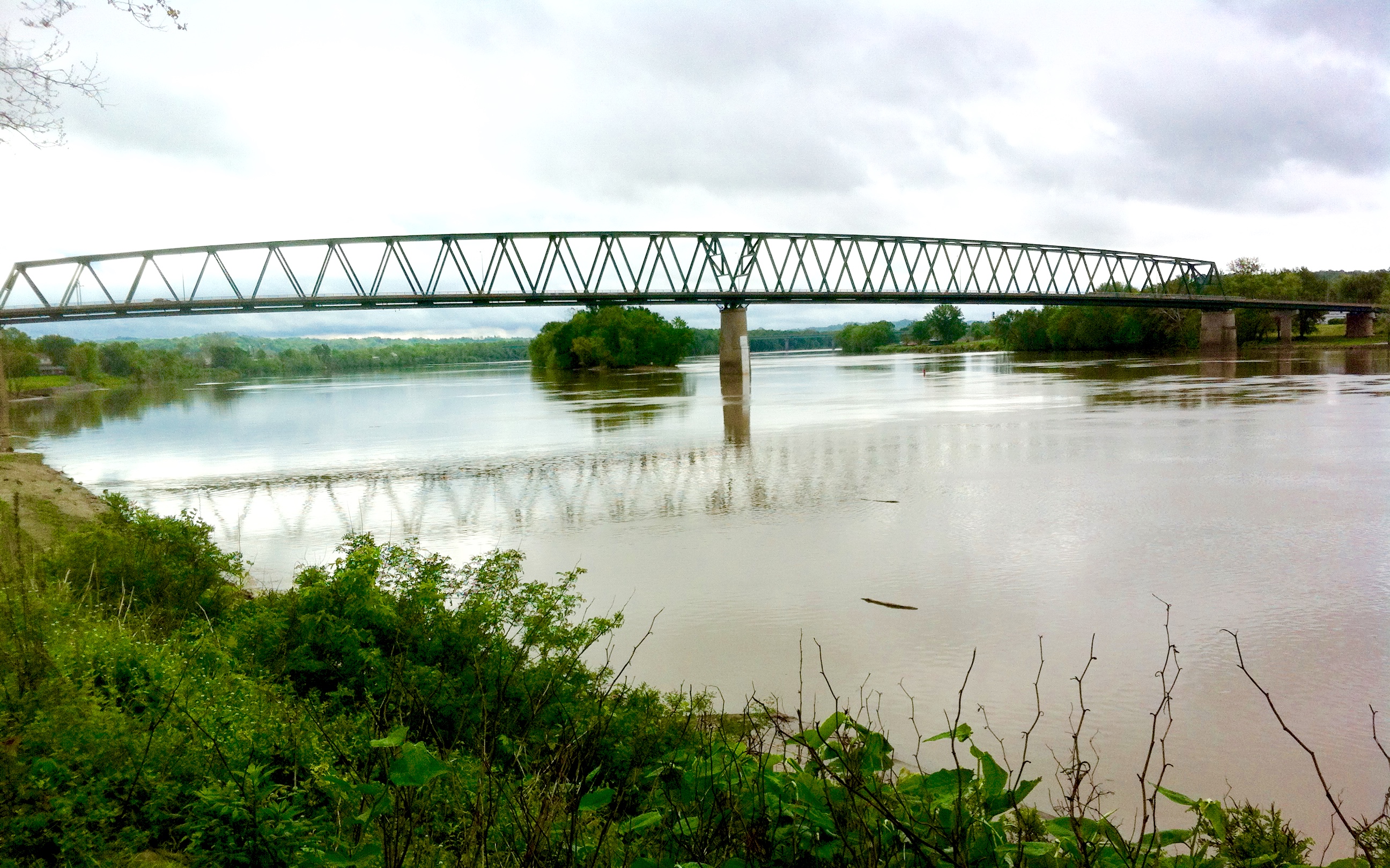
Marietta is an apt place to find this story of American resurgence, following decades of economic dismemberment that engulfed almost all of the six-state, 1,000-mile, 72-county river valley, which starts in Pittsburgh and extends to the Mississippi River. Marietta was founded in 1788 by some of the pioneers and scholars that wrote the 1787 Northwest Territories Ordinance, which among other notable features banned slave holding in states north of the Ohio. The city erected monuments along one of its major boulevards that celebrate the influence of law and government to improve the life of the nation and its inhabitants. And while a noticeable number of its clerks and waitresses and shopkeepers are elderly and still working, the town is starting to hold more of its young adults, in part because the riverfront is cleaner and strolling there at dusk and dawn is a treat.

More later.

– Keith Schneider

20120509-011001.jpg