Ontario Shuts Its Coal Plants

April 2nd, 2013

20130402-162142.jpg

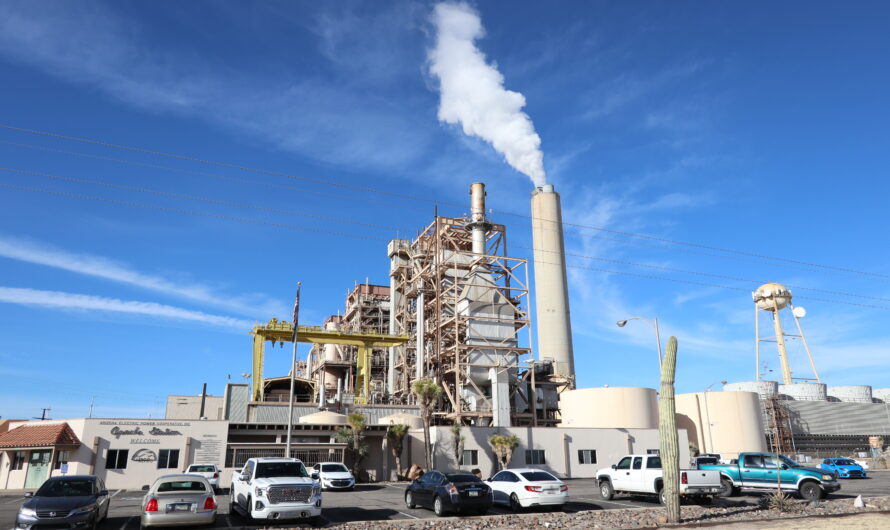
Among the countries tied to coal-fired power is China, which certainly can learn from Ontario’s program to phase the dirtiest fuel out of its generating sector. Here a coal-fired plant operates in Urumqi in western Xinjiang Uygur Autonomous Region. Photo/Keith Schneider

As recently as 2007, the Energy Information Administration (EIA), a research unit of the U.S. Department of Energy, projected that the fuel mix for producing electricity in the U.S. would persist largely unchanged through 2035. According to that estimate, a little more than half of the country’s electricity would come from coal, about 20 percent from nuclear plants, and a little less than 20 percent from natural gas; the balance, roughly 12 percent, would be generated from wind, solar, biomass, and hydropower.

A lot changed over the last five years. In 2012, according to the EIA, U.S. utilities burned 815 million tons of coal for electricity, down from over 1 billion tons in 2005, and the lowest utility coal consumption since 1990. Less than 38 percent of the country’s electricity last year came from coal. As recently as 2009 it was 53 percent. In its most recent assessment, the EIA projects that 49,000 megawatts of coal-fired power — equal to 50 big plants, and 15 percent of existing coal-fired capacity in 2012 – will be retired over the next seven years.

Replacing coal is a surge of plants fueled by natural gas and wind. Last year, gas supplied 29.9 percent of U.S. electricity, up from 23 percent in 2009. And in 2012, with 13.2 megawatts installed nationally (equivalent to 13 big coal-fired plants), wind energy accounted for 42 percent of the nation’s new electrical generating capacity, more than coal and natural gas combined. Texas, of all places, generates over 9 percent of its electricity with 12,200 megawatts of installed wind capacity.

The U.S. transition to cleaner energy sources, particularly in the electrical sector, reflects a trend unfolding with gathering momentum in many industrialized nations.

Electricity generated from renewable energy sources contributed almost one fifth — 19.9 percent — of the European Union’s electricity in 2010, according to commission statistics. From 2000 to 2010, the number of gigawatts of electricity generated from biomass in EU nations more than tripled. During the same decade, the number of gigs generated by wind turbines increased almost seven-fold. A gigawatt is 1 billion watts.

Now comes Ontario, Canada and a new narrative of electrical transition that pushes the envelope of what is possible in the drive to quit the coal-fired power generating business. I’ve reported on the provincial energy program in 2007 here on ModeShift. Today Yale Environment 360 posted my newest piece on Ontario’s transition to cleaner energy sources.

By most measures of environmental policy and progress, Ontario, Canada ranks well. Over the last half-century, Canada’s most populous province required cities and industries to treat every gallon of wastewater, dramatically reduced the level of sulfur and other pollutants that caused acid rain, and convinced the big and politically powerful pulp and paper industry to install state-of-the-art emissions control equipment.

Next year, though, Ontario is scheduled to complete a 21st century environmental cleanup project that distinguishes it among North American jurisdictions. After a decade of work by the Liberal Party government, Ontario at the end of this year is scheduled to close the last of its big coal-fired generators, and leave a single small coal-fired unit available during periods of peak electrical demand until it closes next year. In shutting down the province’s 19 boilers fueled by coal, Ontario will become the first industrial region on the continent to eliminate coal-fired generation.

Read the rest of this entry »

Frack Or Not To Frack? That’s Just One Question

March 28th, 2013

20130328-161007.jpg

At the corner of US 31 and County Line Road in Benzie County, one of the more than 9,000 Antrim Shale natural gas wells drilled in Michigan since the late 1980s. Michigan’s Antrim Shale was among the first natural gas reserves in the U.S. developed from hydrocarbon-bearing shales. Photo/Heather Rousseau

BENZONIA, MI — It’s apparent why a great number of Americans wonder about the risks of fracking and whether states and the federal government ought to shut the technology down. The breakthrough that now enables developers to recover oil and natural gas from hydrocarbon-rich shales 6,000 to 10,000 feet beneath the surface is potentially fraught with danger.

No new technology comes without assorted risks, especially one as environmentally significant and economically powerful as fracking. But along with the risks come benefits. The question is whether the U.S. has the capacity to significantly reduce the threats through regulatory safeguards, or is there one or more aspects of the technology that are so inherently dangerous that fracking should not be allowed at all?

Answering the question involves distinguishing the difference between “potential” and “actual” risks and benefits. On the potential side of the discussion, the risks seem fearsome.

The fracking process blasts millions of gallons of water mixed with chemicals down a well at ultra-high pressure to shatter the rock and release the fuel. Anecdotal evidence, and several instances of contamination confirmed by the federal Environmental Protection Agency, point to a risk that fracking can contaminate freshwater aquifers much closer to the surface. It’s not clear yet how significant that risk is, though the EPA is studying the issue and preparing to issue a definitive report next year.

Public health authorities in Pennsylvania also are starting to study the consequences of fracking to human health, and are focusing on air pollution. Big diesel engines operate at the well sites, and it takes roughly 2,000 truck trips to transport water, fuel, and equipment to each well. Vehicular collisions, moreover, have taken the lives of dozens of truck drivers and motorists in North Dakota and Pennsylvania.

Fracking takes millions of gallons of water at each well and is leading to confrontations over water supply on the Great Plains and desert Southwest. Disposing wastewater and fluids from the process has led to spills in North Dakota and Wyoming. Pumping the wastes down deep disposal wells also has caused small earthquakes in Ohio, Arkansas, and Texas. The concentration of wells in a region, all tied together by new roads, pipeline corridors, and assorted processing and pumping stations, has significant implications for the uses of land, particularly if the development occurs in a forested area like Michigan.

Other potential risks identified by expert panels as varied as the U.S. General Accounting Office and the Society of Petroleum Engineers include the toxicity of the chemicals used in the process, the level of methane (a potent greenhouse gas) that can escape the well as “fugitive” emissions, and the hazards of the drilling process; in China the shale reserves contain high concentrations of hydrogen sulfide, an acutely poisonous gas.

Read the rest of this entry »

More Evidence of Rust Belt Revival

March 25th, 2013

20130325-165920.jpg

An exciting architectural statement rises on the banks of the Ohio River in Owensboro, KY. The city’s convention center is scheduled to open next year. Photo/Keith Schneider

OWENSBORO, KY — When it’s completed next year, the 169,000-square-foot, $48 million convention center under construction in this city of 57,000 will arguably be the most striking architectural achievement on the Ohio River. With its angles and glass and cantilevered roof, the convention center dwells atop a high river bluff like a palace to the future. Which is almost precisely what it is.

Almost two years ago I first set foot in Owensboro to undertake a research project, What’s Done, What’s Next, to suggest new steps the city could take to ensure its prosperity and quality of life this century. I visited for a week a month from May 2011 to October 2011, releasing a study for Citistates that suggested achievable steps — like making it easier for women to participate as elected and civic leaders — that would strengthen the bones of a city that already was a pretty nice place to live and do business. I noticed straight away that the city’s elected leaders participated well with county leaders in pursuing projects of importance, like an $80 million tax increase to develop downtown Owensboro. The new tax was approved in February 2009, in the face of a deepening recession and in a region that had shifted from pragmatic Democratic Senator Wendell Ford to Tea Party conservative Senator Rand Paul.

Owensboro’s new convention center was paid for with those “prime-the-pump” public funds. Other public money went into a new five-acre riverfront park, streetscaping, and other infrastructure. That, in turn, prompted private investments, including the seven-story, 151-room Hampton Inn under construction next door to the convention center, a new office building across the street, and a 120-room Holiday Inn that’s planned for the downtown convention center district.

I also had the chance to travel along the Ohio River, reporting for The New York Times, Circle of Blue, and ModeShift on the surprising bounce in the economic step of a six-state river corridor that had been the belt in the Rust Belt. This month two more of those reports were published in the Times.

The first, a follow-up to a piece on Louisville’s big “wellness and aging sector,” described how Louisville’s wellness and aging companies are helping to design the next era of American retirement.

The second, a report from the Utica shale gas fields of Ohio, found that many of the nation’s biggest natural gas development, processing, and services companies are investing billions of dollars in the infrastructure to prepare and transport the state’s gas reserves to market.

I want to add a note here to ModeShift readers. It’s been too long since my last post in January. My schedule has been consumed with reporting on energy, food, and water from China, India, across the United States, Ontario, and Ohio. The results of that work will appear with more regularity here.

– Keith Schneider

Traverse City’s Next Generation Brand

January 31st, 2013

20130131-124034.jpg

Young people, raised in northwest Michigan, are returning from college to begin their careers and raise their own families in a region that provides a range of fresh opportunities. Photo/Keith Schneider

BENZONIA — Bridge Magazine this week noted Traverse City’s new brand as a place of opportunity for educated and talented young entrepeneurs. The article by Jeff Alexander, a veteran environmental journalist who spent much of his career at the Muskegon Chronicle, notes the demographic and economic trends that are attracting young professionals to start interesting careers and businesses in this region’s cultural and business capital.

Other treatments of the same trend include my September 2012 ModeShift article reporting on the premiere of Aaron Dennis and Jacob Wheeler’s documentary on Palestine — The People & The Olive — and Crain’s Detroit Business’s report three months later on the excitement that Traverse City’s “boomerang” generation is building in the region.

Two of the three pieces note the role played by Chris Treter, the principal behind the Traverse City-based Higher Grounds coffee company and On The Ground global public interest non-profit, who’s at the center of one of the millennial generation’s most robust professional communities in the region. There are others. It also was good to see Doug Luciani, and the regional chamber, mentioned in the Bridge Magazine article, as a force for good. And the article reported on my colleague and friend Hans Voss, who since 2000 has directed the Michigan Land Use Institute, a force behind the region’s greening and local foods campaigns.

What’s significant about these articles is how they consistently identify the activity now occurring in the region’s millennial generation as a consequence of Traverse City’s deepening economic opportunities and the rich quality of life centered around small towns, close communities, and healthy lifestyles.

The latter, of course, is all about our forests, parks, clean water, our scenic and quiet trails and roads. More recently fresh local foods, and the economic and cultural strength that a robust food-producing sector yields, have also figured in the region’s healthy lifestyle.

Read the rest of this entry »

A Cathedral to Beer in Pittsburgh

January 28th, 2013

20130128-171407.jpg

The Church Brew Works opened in 1996 in the then 94-year-old former St. John The Baptist Roman Catholic church, and has thrived ever since. Photo/Keith Schneider

PITTSBURGH — On the way to President Obama’s second inauguration last week we celebrated at the most confounding brew pub I’ve ever visited: The Church Brew Works. As an example of urban design serving and celebrating a new use, the pub is hard to beat.

First of all is the venue. The brew pub is in Pittsburgh’s Lawrenceville section, about 10 minutes from the golden bridges and glass towers of the city’s handsome downtown. The old church is easy to find on Liberty Avenue. But the entrance to the pub is deliberately inconclusive. No big entrance sign. No way-finding hints. Just a big 10,000-square-foot, 111-year-old red brick neighborhood church building with stout front doors and a dark vestibule.

Not sure where you are, you enter the vestibule, see the light coming through the small windows from the sanctuary. You carefully and slowly open the doors to a surge of crowd noise, soaring cathedral arches, a lighted pathway down the center leading straight to gleaming brew kettles set on a pedestal in a religious nave. It was like Oz. Every now and again you’re amazed by a place and exclaim, Holy Shit!

The Church Brew Works is one of those places.

The second reason to feel fortunate about The Church Brew Works is its beer and food. The menu ranges from pierogis to hummus, pasta to chops. The beer is great. Late last year the Brew Works won the Best Large Brew Pub award from the Great American Beer Festival competition, and its brewer was named “Brewer of the Year.”

The third feature of the Brew Works that intrigued me was how it defined its space and time — honoring beer, food, and good cheer in such a lavish and distinctive way. And how it seemed to defy religious convention. The church was built in 1902 and closed by the Diocese in 1993. The brew pub’s owner purchased the property for less than $200,000 in 1996.

The pub’s design incorporates the stain glass windows, much of the nave, and embraces the sedate colors and meaningful dark lighting of a Roman Catholic Church. The effect clearly meets at least part of its goal to glory, at least a little bit, in God.

It’s effective enough to shape popular views. There are more than a few of Pittsburgh’s Catholic residents who believe drinking beer in a former Roman Catholic Church is a sacrilege. I mentioned the Church Works to two Pittsburgh residents I met later that week. One said she never heard of it. The other, a restaurant owner in the city, said with a toss of the head that he’d never been to the place.

But the moral dimensions of the Brew Works also cultivates Catholics, and customers of other denominations, who spend their lives and some of their free time defying religious convention. The Church Brew Works does a good business and has since its opening 17 years ago.

– Keith Schneider

20130128-180440.jpg

The brew pub design incorporates the stain glass windows, much of the nave, the sedate colors and meaningful dark lighting of a Roman Catholic Church. Photo/Keith Schneider

At Start of Second Term Obama Declares “We Are Made For This Moment”

January 23rd, 2013

20130123-104103.jpg

After delivering a second inaugural address fused with measured confidence, President Obama beams at the huge, cheering crowd that greeted him along the Pennsylvania Avenue parade route. Photo/Keith Schneider

WASHINGTON — Four years ago, when crisis lay like a dark shadow across the land, and President Obama’s first inaugural address served as a kind of pep talk to refute what he called “the nagging fear that America’s decline is inevitable,” this week’s inspiring and dignified Inaugural ceremonies seemed so unlikely, if not utterly impossible.

In 2009, America did indeed feel like a nation slipping backwards. We all know the evidence. Job losses. Bank failures. Foreclosures. Terrorist attack. Wars prompted by a campaign of lies and deceit. An opposition party, driven by fanatic inflexible ideology, dangerously intolerant, and determined to wreck the country.

We were a country afraid of the future and bent by the potent winds of economic transition that so confused us we chose to cower instead of compete.

On Monday, though, the thoroughly confident president, buoyed by an improving economy, and advancing against a weakened Republican opposition in retreat, declared without any irony:

“America’s possibilities are limitless, for we possess all the qualities that this world without boundaries demands: youth and drive, diversity and openness, an endless capacity for risk and a gift for reinvention. My fellow Americans, we are made for this moment and we will seize it, so long as we seize it together.”

Those words ring true to me. The first weeks of 2013 feel much different than the first weeks of 2009. Or the last months of 2012, for that matter. Some of that has to do with the economy. The United States now enjoys a globally competitive edge in agriculture, energy, the Internet, transportation, advanced manufacturing, and health care and medical research. As foundations for a new era of prosperity, the success of these seven sectors are unmatched by any other nation.

Read the rest of this entry »

On Water and Energy, India Is Different

January 15th, 2013

20130115-115503.jpg

A 1,350-megawatt coal-fired power plant under construction in Tilda, near Raipur in Chhattisgarh, is one of more than 100 big generating stations recently built or nearing completion across India. Only China has a bigger coal-fired power plant construction program. Photo/Keith Schneider

TRAVERSE CITY — It’s been a couple of weeks since our Circle of Blue team completed its 27-day research trip to India. Our work, a scoping mission to prepare for a comprehensive project in 2013, focused on understanding the contest between energy, food, and water in a nation soon to be the world’s most populous. India also is contending with deeper droughts during a period when it has emerged as one of the planet’s top consumers of water-thirsty energy and grain.

The ground reporting, and photography by J. Carl Ganter and Aubrey Parker, took shape in three phases helped considerably by the geography of India’s policy making, farm productivity, and energy development. We spent the first week reporting in Delhi, where we talked with top government and NGO authorities on energy, water, and the farm sector. We spent more than a week touring farms and food processing mills and interviewing farm, energy, and water sector authorities in Punjab and Haryana in northern India, two of the country’s prime grain-producing states. Our last week was spent in Chhattisgarh in east-central India, the second largest coal-producing and largest coal-consuming state. There we visited Asia’s largest open pit coal mine, interviewed coal industry executives, and also spent time with entrepreneurs in the electricity supply and new alternative energy sectors.

Circle of Blue is preparing a four-part series that launches in early February to report in text, original photographs, and infographics what we found. The articles explore farm practices, coal production, resource politics and policy in the era of climate change, and a range of solutions that have potential to become mainstream.

India is the third country Circle of Blue has explored for our Choke Point project, which debuted in 2010 with Choke Point: U.S., expanded in 2011 with Choke Point: China, and went global in 2012 with two trips back to China and a third to India.

All of this reporting from places as distant and different as North Dakota and Ohio, Sichuan and Heilongjiang, Punjab and Chhattisgarh yielded a trove of new facts and a globally significant and fresh narrative about the challenges the world faces in supplying sufficient energy to businesses, and enough food to steadily expanding populations.

Of all the places we’ve explored in the last two years, needless to say, but let’s say it straight away, India was different — the most engrossing, the most engulfing, the most engaging.

In the United States, the conflicts over energy, food, and water are largely confined to specific regions of the country – the Southwest, the Atlanta region, the Great Plains. At this point in the U.S., solving the energy-food-water choke points is principally a matter of refining the basic operating, legal, and investment practices in three vital industrial sectors – energy, agriculture, utilities. The contest over resources reflect the need to adjust policy, operating practices, and investments that are in place and have political credibility. That work is underway, helped considerably by a new emphasis on how droughts and excessive heat are damaging harvests and diminishing electrical generation.

In terms of metaphor, the environmental and economic challenges posed by the tightening choke points over energy, food, and water in the U.S. are well recognized buoys carried along by a strong current of economic transition.

In China, though, the energy-food-water choke points are massive waves battering the shores of that nation’s economic security and environmental safety. China is putting to work the full measure of its technology, treasury, human capital, and resource base to develop at a speed and scale never before witnessed on the planet. The nation’s drive to modernize, and expand its middle class, is helped immeasurably by a centralized governing system that excludes opposition, sets huge goals, and executes to achieve them – shifting grain production from dry provinces to wetter ones, expanding coal production 100 million metric tons annually, developing over 100 big hydroelectric projects in sensitive mountain valleys. But the nation groans in response, pounded by the angry waves of water scarcity, desertification and other deep scars on the land, profoundly dangerous pollution, and a towering waste of resources that weaken China’s treasury and test the patience of its people.

In India, the confrontation over rising demand for energy and food, and diminished water resources, is more subtle, like a powerful political and cultural undertow.

Read the rest of this entry »

Hope For China’s Deep Shale Gas Development Impeded by Technical Reality

January 10th, 2013

20130110-123939.jpg

Wei-201H3, the first deep shale, horizontally-drilled, hydrofracked natural gas well in China. Photo/Keith Schneider

Atmospheric concentrations of carbon dioxide are climbing, in large measure because of China’s production and combustion of more than 3 billion metric tons of coal annually, or nearly four times as much coal as the United States produces and burns. One of the solutions — though it is attracting rigorous opposition in the U.S. — is replacing coal with cleaner-burning natural gas.

Even with protests over fracking, natural gas is replacing coal in the U.S., where technical advances in drilling and production technology are yielding a motherlode of oil and gas from the country’s deep shale reserves.

With technical assistance from the Obama administration, China is busy probing its deep shale natural gas reserves, too. Last year I investigated how well Chinese shale gas development was proceeding, spending more than a week in Sichuan Province, where much of the new development is occurring. My conclusion: China’s hope to replace some of its climate-changing coal production with natural gas is just that, a big hope. Impediments abound. My report is part of Circle of Blue’s path-breaking Choke Point: China project.

XINCHANGZHEN, China— Liu Zhongqi’s mud and brick home is set in a cluster of hillside houses in the village of Lao Chang, a serene half-circle of settlement on the west side of this misty Sichuan Province valley.

A few steps away is a flooded paddy, about half the size of an American front lawn, where Liu raises rice. Next to that is a slightly larger and deeper pond where he produces fish. And just beyond Liu’s fishpond is something very new here and potentially momentous: Wei-201H3, one of China’s first horizontally drilled and hydro-fracked deep shale natural gas well.

The completion of Wei-201H3 in January 2012 — and the earlier development of two other deep shale wells, drilled within a half-kilometer of Liu’s home — introduced more than the sounds of diesel engines and other industrial dissonance. The new wells, Lao Chang residents told Circle of Blue, have wrecked the pastoral iconography of this valley, a place where repetition and water wove together a centuries-old rural mosaic of green fields and dark ponds.

“They came here one day,” Liu said. “It’s been hard. Very hard.”

The same can be said for China’s nascent shale gas industry. In November 2009, U.S. President Barack Obama and Chinese President Hu Jintao signed a bilateral agreement to deploy U.S. expertise to develop China’s deep shale gas reserves and Chinese capital to finance the much more mature American shale gas sector. The bilateral pact, formalized in a Beijing ceremony that attracted global media attention, also spurred Chinese and Western energy companies to develop partnerships and dispatch crews and rigs to drill experimental deep shale natural gas wells in bucolic and densely populated Sichuan valleys like this one.

The goal here — and in half a dozen other energy-rich provinces — is two fold:

1. Reach a national production target of 6.5 billion cubic meters (229 billion cubic feet) of shale gas by 2015.

2. Duplicate the American shale gas boom.

The hope is that by increasing shale gas production, China can begin to wean itself off of coal, as the United States has begun to do. Since 2005, tens of thousands of U.S. deep shale gas wells, drilled in a dozen states, have driven U.S. energy costs down, fueled manufacturing job growth, reduced reliance on coal as a fuel source for generating electricity, and helped U.S. climate-changing carbon emissions to drop to the lowest levels in a generation.

“We’re just starting to understand what we need to develop shale gas,” said Zhang Mi, chairman and president of the HongHua Group, a manufacturer of drilling rigs based in Chengdu, a city of 14 million residents about 140 kilometers (90 miles) north of Lao Chang . “Exploration is in the experimental stage. From my perspective, Sichuan is China’s Texas for shale gas development.”

But many of Sichuan’s field engineers, analysts, industry executive, and resource managers say there is convincing evidence that China’s shale gas industry is developing at a much slower rate than either Chinese or American leadership had anticipated — in other words, it is hard to see how China expects to even come close to meeting its 2015 production goal. China’s shale gas sector is buffeted by uncertainty about the quality of China’s shale reserves, concerns about scarce freshwater supplies, competition from other energy sources, the potential safety threats posed by a byproduct poison gas, and emerging civic distrust. As a result shale gas development has yet to move any faster than a very slow crawl.

See the entire article here at Circle of Blue.

– Keith Schneider

20130110-125714.jpg

Lui Zhongqi, with his wife, near the deep shale well that he says is disrupting his life, and harming his food production.Photo/Keith Schneider

Circle of Blue — At the Frontline of the Global Contest Over Energy, Food, and Water

January 8th, 2013

20130108-133928.jpg

Pressed by growing demand to cool a proliferation of new coal-fired power plants in Chhattisgarh, India, workers expand and modernize a big water transport canal. Photo/Keith Schneider

TRAVERSE CITY, MI — As we’ve known for years now, the diminishment of the mainstream American media is opening fresh opportunities for more nimble and skilled newsrooms to produce first-rate reporting. Nowhere is that more true than at Circle of Blue, where I serve as senior editor, reporting from across the U.S. and overseas, and helping to guide an extraordinarily talented and committed stable of young journalists, producers, and graphic artists.

My colleague, Circle of Blue’s news desk editor Aubrey Parker, collected all of our online work from 2012. Take a look at the links below. They describe a remarkable story of a 21st century online multi-media newsroom of the future — based in Traverse City and collaborating with prominent think tanks, universities, media partners, and government agencies around the world.

In the realm of global journalism from the frontlines of the confrontation over rising demand for energy and food, and diminishing supplies of fresh water, no news and science organization is producing a stronger, more learned, more probing report. Last summer, Circle of Blue won the $100,000 Rockefeller Foundation Centennial Innovation Award for our distinctive and collaborative international operating system, which produced Circle of Blue’s influential Choke Point: U.S. and Choke Point: China reports.

Read the rest of this entry »

The Wreckage Wrought By A Marauding Minority

December 26th, 2012

20121226-105311.jpg

Along the Champs Elysees on Christmas Day, nobody worried about getting gunned down in the street, or about a marauding minority political party bent on wrecking the nation. Photo/Keith Schneider

PARIS — Along the Champs Elysees’ on Christmas night, an angels’ envy of rope-thin LED halos — colors shifting from red to blue to white — circled the trees and lit the broad boulevard where thousands of people strolled carefree. Nobody worried about the sick and the deranged wielding assault weapons capable of mowing children down like wheat toppled by a stout wind. People stood in line at a theater, clearly unconcerned that the movie inside could be the last one they watched.

Paris, where I’ve alighted this week, is the largest city (2.2 million residents) in one of the world’s largest democracies (population 65.6 million). And while there are issues aplenty here, neither the city nor the nation are undermined by a marauding minority bent on wrecking order and stability from within.

That is not true at home. In the United States, this was a Christmas of consideration for what we’ve allowed ourselves to become. The murders of 20 children in Newtown, Connecticut was a chilling disaster for the country. Newtown crystalized the accumulation of tragedies that have weakened the nation – terrorist attack, financial meltdown, climate-warming fires and floods, mass murder, governing deceit and fecklessness. More significantly, the massacre clarified the principal cause — a reckless and dangerous minority, armed with a governing strategy constructed from the raw materials of greed and fear, and firing with indiscriminate recklessness the bullets of inflexible ideology.

The central issue for America’s intelligent, world-aware, reality-respectful president and his progressive supporters is pretty straightforward: How to stamp out the renegade threat. That campaign, it seems to me, encompasses four essential components:

Read the rest of this entry »