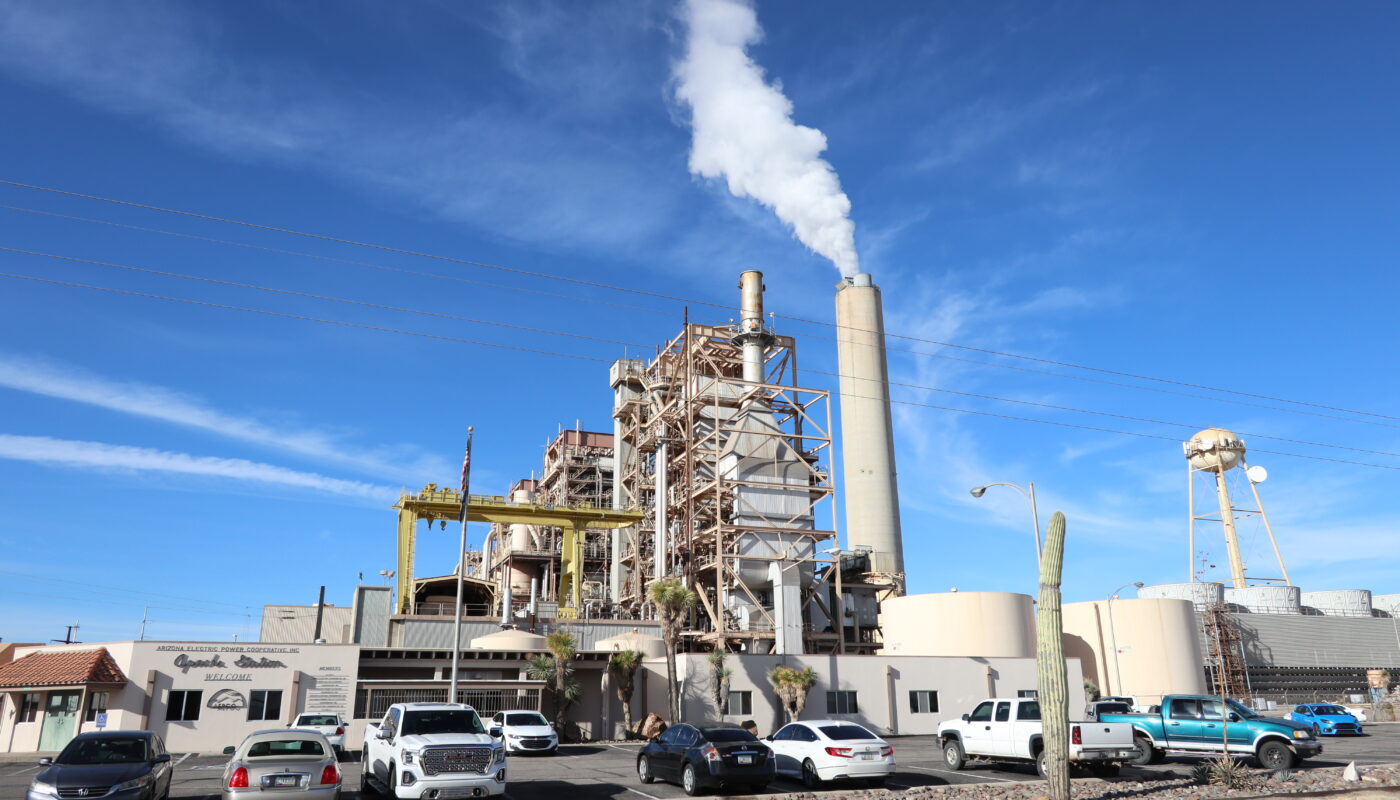
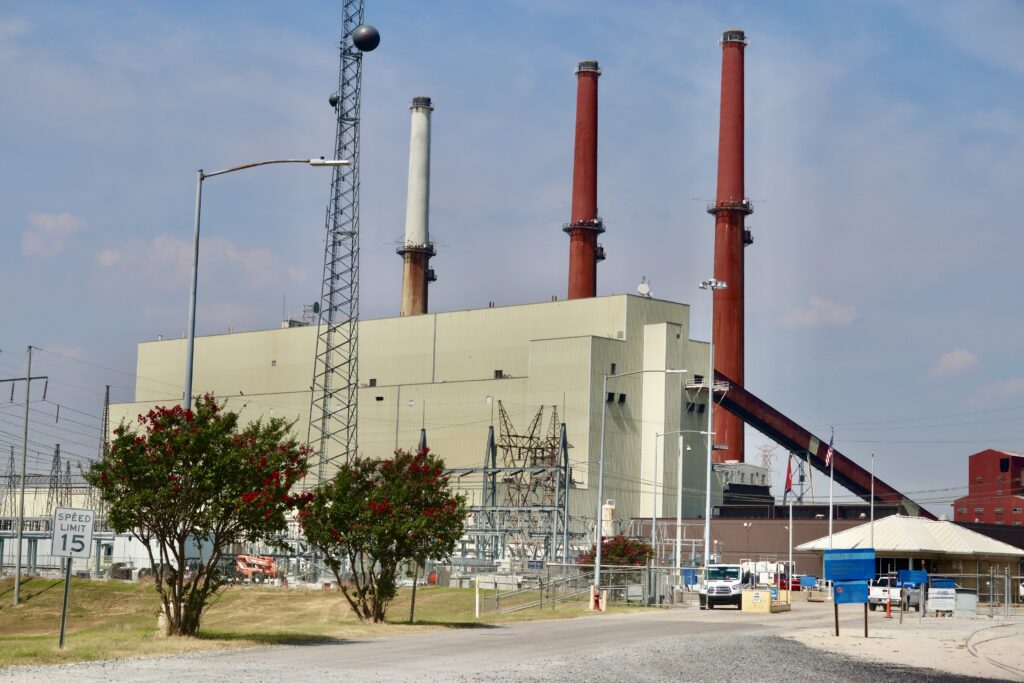
most expensive fuel. Here a coal-fired plant in Arizona. (Photo/Keith Schneider)
Until May 2025, utility executives like those at Consumers Energy in Michigan operated in the world of orderly oversight of electricity generation.
In coordination with MISO, the regional transmission agency, and the Michigan Public Service Commission (MPSC), Consumers Energy decided when to build new power plants to meet energy demand. When plants grew old and too costly to operate, as happened with the coal-fired J.H. Campbell Generating Station in western Michigan, Consumers collaborated with MISO and the MPSC in deciding when they would close.
On May 23, 2025, that disciplined process was upended when the Trump administration declared an electrical supply “emergency” and ordered Consumers to keep the 1,420-megawatt J.H. Campbell plant operating. The 90-day order was delivered eight days before Consumers had scheduled to permanently retire the facility after 63 years of operation. The Department of Energy, which issued the order, has renewed it three times and the earliest J.H. Campbell can close is mid-May, though it’s likely to be extended again.
The administration wasn’t interested in keeping only the J.H. Campbell station operating. Emergency orders have been issued to block retirements of three more coal-fired plants in three states, and the number is expected to increase later this year.
The orders are disrupting electricity markets, say utility executives, and increasing the cost of electricity for customers. They are also producing millions of tons of toxic air and water pollution that would have been halted. Environmental groups say the orders are not only unlawful — they are stifling development of cleaner energy sources, particularly on the old plant sites already outfitted with expensive transmission infrastructure.
Nothing about the administration’s actions is typical. The May order was the first time the federal government had intervened on its own to keep an electrical generating plant operating, and not in response to a request from the utility, the state, or the regional transmission operator. Though such emergency orders have been issued in the past, they have been used sparingly to address war-related events before and during World War Two, and weather-related events since then . And when they were issued, the orders almost always lasted hours or days, not months or a year.
“It is sort of heavy handed, top down,” said Michael Giberson, senior fellow in energy policy at the R Street Institute, a Washington, D.C.-based think tank. “This is the kind of thing that a conservative from the free-market conservative Reagan-era would see as government being the problem. Telling other people how to run their businesses.”
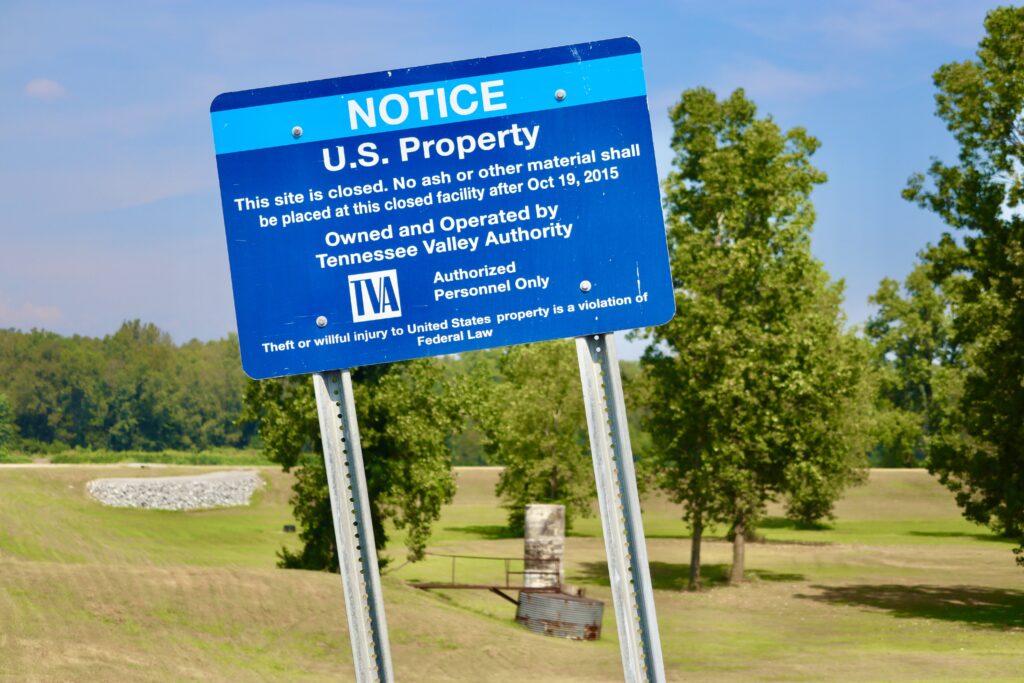
coal ash piles. Here, a reclaimed coal ash site in Memphis. (Photo/Keith Schneider)
The president and his aides justified the J.H. Cambell order and others that followed on forecasts that greater generating capacity is needed to meet steadily rising demand for electricity. “Americans should not be forced to wonder if their power grid can support their homes and businesses,” said Energy Secretary Chris Wright in a statement. “Under President Trump’s leadership, the Department of Energy will use all tools available to maintain a reliable, affordable, and secure energy system for the American people.”
But critics contend the emergency orders will succeed only in driving up the cost of electricity and continuing operations at the oldest and dirtiest coal-fired generating stations. “All this does is increase Michiganders’ electric bills and worsen their health, as a dirty and expensive plant most-everyone agrees should close continues to spew filth into the air due to political whims in D.C.,” countered Caroline Reiser, senior attorney at the Natural Resources Defense Council, a national environmental group, said in a statement.
A Big Disruption
For over a century, the U.S. government played almost no role in utility decisions to open a new power plant or close an old one. The Federal Energy Regulatory Commission’s major charge is to oversee electricity, oil, and natural gas transmission across state lines.
The Department of Energy doesn’t deal with commercial electricity generating utilities. Except in one instance: the “emergency” authority under the 90-year-old Federal Power Act to order old power plants bound for retirement to remain open. Though the act was rarely used after World War Two, President Trump and Energy Secretary Chris Wright are now relying on that authority in section 202(c) to command utilities in Michigan, Colorado, Indiana, and Washington state to keep operating five old coal-fired plants that were headed for retirement. More such orders are expected this year as utilities have announced plans to close coal-fired stations in Minnesota, Wisconsin, Tennessee, and several more states.
Keeping old plants operating that were in the process of retiring is expensive. Old equipment that was failing needs maintenance and repair. New supplies of fuel must be purchased at high spot market prices. Since May, when the administration issued its first emergency 90-day order to keep J.H. Campbell open – the orders were renewed in August, November, and February – Consumers said it is spending $615,000 a day in added costs, or close to $200 million so far. Consumers executives did not respond to requests for an interview.
“Hundreds of millions of dollars is real money. More importantly, it’s money that’s not giving a good value to the ratepayers,” said Michael Goggin, executive vice president of Grid Strategies, a Washington, D.C.–based consultancy and author of a well-regarded report for Earthjustice on the cost of impeding plant retirements. “J.H. Cambell is an old, uneconomic plant. That’s why Consumers wanted to retire it. That’s why the Michigan Public Service Commission approved the plan to retire it. The Michigan regulators have the information, the insight into the plant’s condition, its performance. The Department of Energy does not have access to that information. It’s basically shooting blind to override the decision that was made by the informed parties.”
Earthjustice and nine other public interest groups are challenging the legality of the emergency orders in federal district court in Washington, D.C.
Michigan Attorney General Dana Nessel has filed several motions to block the emergency order to keep the J.H. Campbell plant open.
In January, the Niskanen Center, a Washington-based free-market think tank, filed an amicus brief in support of Nessel’s motion in the U.S. Court of Appeals for the District of Columbia. Niskanen argues that the order was unnecessary to ensure the reliability of the power grid and that ordering it to stay open undermines electricity markets.
in 2018 and was replaced by a natural gas fired generating station. (Photo/Keith Schneider)
Electric utilities and their trade associations, though, have been surprisingly quiet. So far, the only utilities challenging the orders are Tri-State Generation and Transmission Association and the Platte River Power Authority, co-owners of the Craig Unit 1 coal power plant in Moffat County, Colorado.
On December 30, a day before Unit 1 was scheduled to retire, the utilities received an order to keep it open. On January 29, the two companies requested a hearing on the government order. “We have planned for the retirement of this resource for over a decade and have proactively replaced the capacity and energy from new?sources,”?said Jason Frisbie, general manager and CEO of Platte River, in a statement. “While Platte River will continue to comply with federal law, we disagree with the need to keep the plant open.”??
Promoting “Beautiful Clean Coal”
Lurking in the background of the administration’s operating orders is President Trump’s longstanding professed devotion to the rural regions, the voters, and industry that supplies fuel to coal-fired power plants. On the first day of his second term Trump declared a “national energy emergency” to “expedite the completion of all authorized and appropriated infrastructure, energy, environmental, and natural resources.”
The president issued a second order specifically to “reinvigorate America’s clean coal industry.” Those steps include $625 million in federal grants to “reinvigorate” the coal sector and directing the Interior Department to open more federal land for coal leasing. In February the president ordered the Pentagon to purchase more electricity from coal and announced that the Energy Department would award $175 million to upgrade six coal-fired plants.
The president also is reducing the cost of operating old coal-fired plants. The Environmental Protection Agency is opening huge holes in the Clean Air Act to allow coal-fired power plants to release unlimited levels of climate-changing gases into the atmosphere, and discharge much more toxic chemical pollution into air and water.
Coal sector executives applaud these changes in policy and practice. “Coal plants, baseload plants, are critical to the well-being of our grid,” said Emily Arthun, CEO of the American Coal Council, an industry trade group. “Coal is needed at critical moments for energy.”
Coal, though, is the dirtiest and most expensive way to generate electricity. Every facet of its production and use – from mining to transport to combustion to ash waste storage – degrades land, water, air, and public health.
It’s not at all clear, moreover, that any of the administration’s edicts will slow the death march for coal and coal-fired power plants that started 20 years ago when coal production peaked at nearly 1.2 billion tons. By comparison, in 2024, the U.S. coal sector mined only 512 million tons.
The slide in production is almost entirely due to replacing coal-fired power plants with more efficient and cleaner energy sources. More than 300 coal?fired power plants have closed in the U.S. since 2010, according to federal figures. Coal-fired generating capacity was 188 gigawatts in 2024, the latest year for accurate data, down from 318 gigawatts in 2011.
The Great Lakes states have served as the epicenter of the dive in demand. In Michigan, for example, 88 coal-fired boilers at 32 plants had nearly 13 gigawatts of generating capacity in 2017, according to the Global Energy Monitor. Today there are six plants with 6.3 gigawatts of capacity.
Will the Trump administration’s emergency orders make a significant difference in reversing these trends? Basic math says not likely. It takes roughly 3 million tons of coal to generate 1 gigawatt (1,000 megawatts of electricity). As of March, taking into account all the emergency orders to block plant closures, the DOE has, so far, stalled the retirement of 4.4 gigawatts of coal-fired generating capacity. That amounts to roughly 12 million tons of coal, or less than three percent of current production.
Even with the Trump administration’s booster efforts, the Energy Information Administration, a research and statistics unit of the Energy Department, projects that coal production will fall to 200 million tons by mid-century, 60 percent less than today. In Michigan, Attorney General Nessel is a powerful voice of opposition to the administration’s orders to keep the J.H. Campbell plant open. “The Department of Energy has once again failed to show any legitimate energy emergency after almost a year of unlawfully forcing the J.H. Campbell Plant to remain operational,” Nessel said in a statement. “Instead of respecting Michigan’s careful planning and the rule of law, this administration is propping up an aging coal plant at a staggering and completely unnecessary cost to ratepayers.”
— Keith Schneider