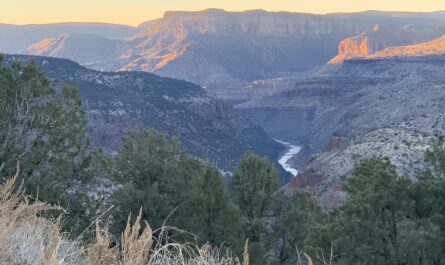

wildlife habitat, and toxic substances in towns like Frankfort, Michigan
is carried out by state environment and natural resources departments. (Photo/Keith Schneider)
Every dollar that the federal government directs to state environment departments enables the Great Lakes and every other region to steward natural resources, yielding many times the value of the federal contribution. State environment departments make the case daily that they merit more financial support, not less.
That is why Circle of Blue’s opinion desk has been worried for months about the dangerous consequences of President Trump’s proposal to rip $5 billion – 55 percent – out of the Environmental Protection Agency’s $9.1 billion budget.
Now that it’s September, we’re encouraged (just a tiny bit, mind you) by the actions MAGA Republicans in both houses of Congress have taken to break with the president to reduce the size of the proposed EPA budget reduction.
The Republican-led House proposes a less absurd but still dire 26 percent cut for the EPA. The Senate wants to shave a more reasonable 6 percent out of the environmental agency’s 2026 budget. Lawmakers from both chambers are meeting to reach a compromise in time to add the EPA provisions to a final federal budget bill by the end of the month to avoid a government shutdown.
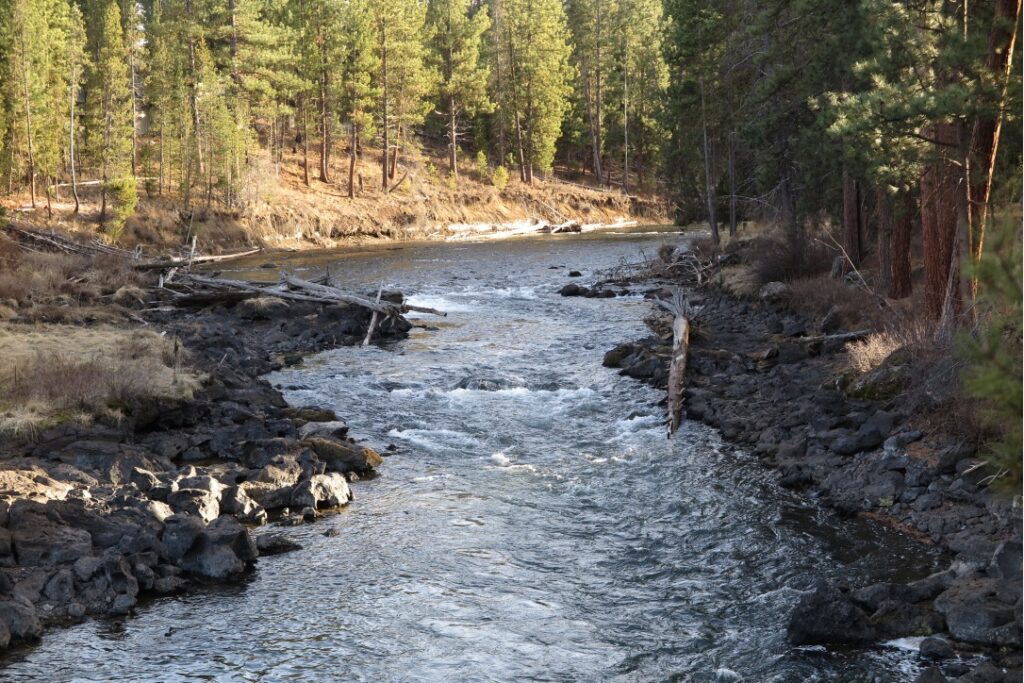
Both proposals are a visible and aggressive rebuke of Trump at the federal level that attracted scant comment in the capital. That doesn’t mean, though, that we’re anywhere close to being relieved. Here’s why. Most of the work – 90 percent, in fact – of meeting the goals of federal statutes to safely manage air, water, wildlife habitat, and toxic substances is carried out by state environment and natural resources departments. And sizable portions of every state’s environment budget are funded by the EPA.
For instance, the Illinois EPA receives $1 billion of its $1.3 billion budget from U.S. EPA funds. Similarly, Michigan’s Department of Environment, Great Lakes, and Energy (EGLE) receives 52 percent of its $1.2 billion annual budget from federal revenue.
The Environmental Management Division of the Wisconsin Department of Natural Resources gains a quarter of the funding for its air quality program from the U.S. EPA. Almost all of the $34.3 million Ohio EPA budget for protecting water quality is funded by the U.S. EPA.
State authorities insist they will manage with what they have. “EGLE continues to keep an eye on federal actions and potential actions,” said Dale George, the department’s communications director, in an email message. “We’re not letting uncertainty shift the focus from our statutory functions protecting Michigan’s environment and public health.”
State Departments Will Have Less Money
EGLE employs 1,500 full-time staff members, and judging from the generally first-class condition of Michigan’s waters, forests, shorelines, and streams, the agency is holding its own. But the loss of tens of millions of federal dollars in the environmental protection programs in Michigan and every other state seriously diminishes their capacity.
The reason: responsibilities of state environment agencies are extensive, expensive, and – with the exception of major mistakes – generally out of public sight. They encompass such tasks as deciding permit conditions for new commercial and industrial developments. They monitor the quality of streams and the safety of drinking water. They ensure that toxic cleanups, mining, and oil and gas production are done safely. And they prosecute violations.

State environment departments also are responsible for administering their portion of the more than $4 billion from the EPA that is available to local governments for modernizing drinking water infrastructure and preventing water pollution. President Trump proposed to cut most of the funding for this low-interest loan and grant program. The House is eyeing a 24 percent cut, while the Senate wants to maintain current funding levels.
To everyday Americans that may appear to be tussling around big dollars. In government terms, it’s not. Environment department budgets typically are a fraction – 1 to 3 percent – of total state budgets. The U.S. EPA budget is less than two-tenths of 1 percent of this year’s $6.8 trillion federal budget.
At that level the president’s assertion that cutting the EPA budget will reduce the federal deficit is absurd. The deficit has grown even as states have steadily lost federal support for their core environmental programs for over two decades.
EPA funding in 2025 for what the agency calls “categorical” grants for air and water quality, pollution prevention, toxic waste management, and 18 other core programs was $1 billion. In 2003, the budget for categorical grants was $1.14 billion, which in real dollar terms, accounting for inflation, is equal to $2 billion today.
In other words, states lost half of their federal funding in 22 years for the day-to-day work they do to protect the environment.
President Trump proposed earlier this year to eliminate 19 of the 22 categorical grants. Congress appears ready to reject those cuts, too.
That’s a relief. In 1964 the Wilderness Act was enacted to block development in the country’s wildest public lands. In the next 16 years the United States embarked on a profoundly important and successful era of national environmental policy to limit damage to air, water, habitat, and people that culminated in 1980 with the federal Superfund law to clean up toxic wastes. Almost every one of the environmental statutes relied on the concept of cooperation between the federal and state governments.
The federal government established the basic framework and goals. The EPA provided financial support to reach them. State and local agencies agreed to be directly responsible for implementation and enforcement.
Breaking Cooperation?
President Trump proposed in his 2026 budget plan to wreck that relationship. Even reactionaries in Congress rejected the most extreme version of Trump’s gambit.
But whatever Congress decides on the EPA budget, state environment departments next year will still receive substantially less federal support for their work. Every state will feel the consequences. Erosion in the quality of a state’s natural abundance, and its accessibility, weakens the quality of life and the condition of the economy.
Less money limits state oversight of polluters and law breakers. It will slow administrative functions, like reviewing and issuing new air, water quality, and operating permits. These delays aggravate business and factory owners. It could cause employers to lay off staff and abandon their projects.
Michigan, my home state, is rich now in clean water, clean air, unspoiled shorelines and Lake Michigan sand dunes, ample freshwater fisheries, and millions of acres of public forest accessible by hundreds of trails.
It’s a legacy of effective environmentalism that supports abundant wildlife, a robust economy, a reliably excellent experience for millions of faithfully returning visitors, and life-in-balance for the people of this beautiful state. I dread to think how serious reductions in federal support will spoil what the state environment agency has accomplished over the last half century.
— Keith Schneider