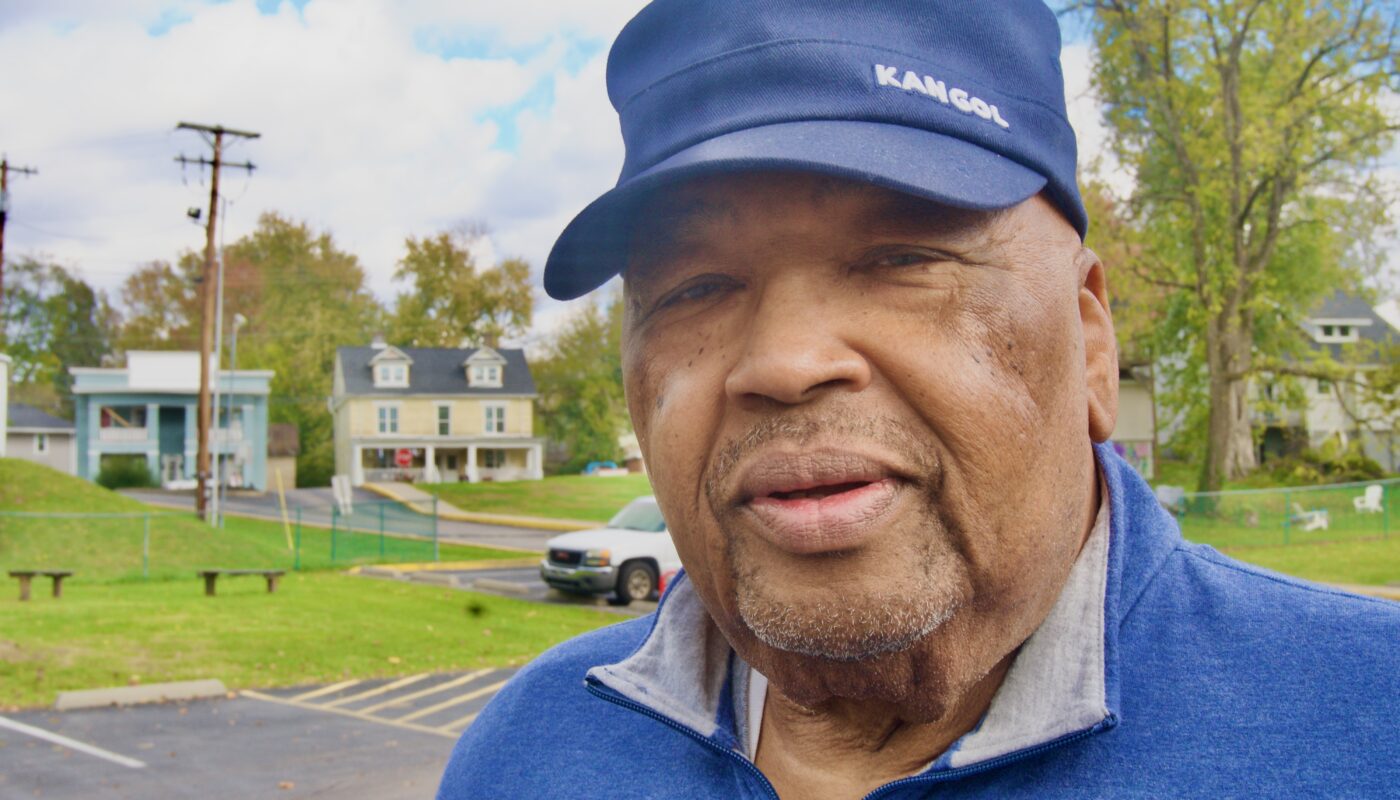
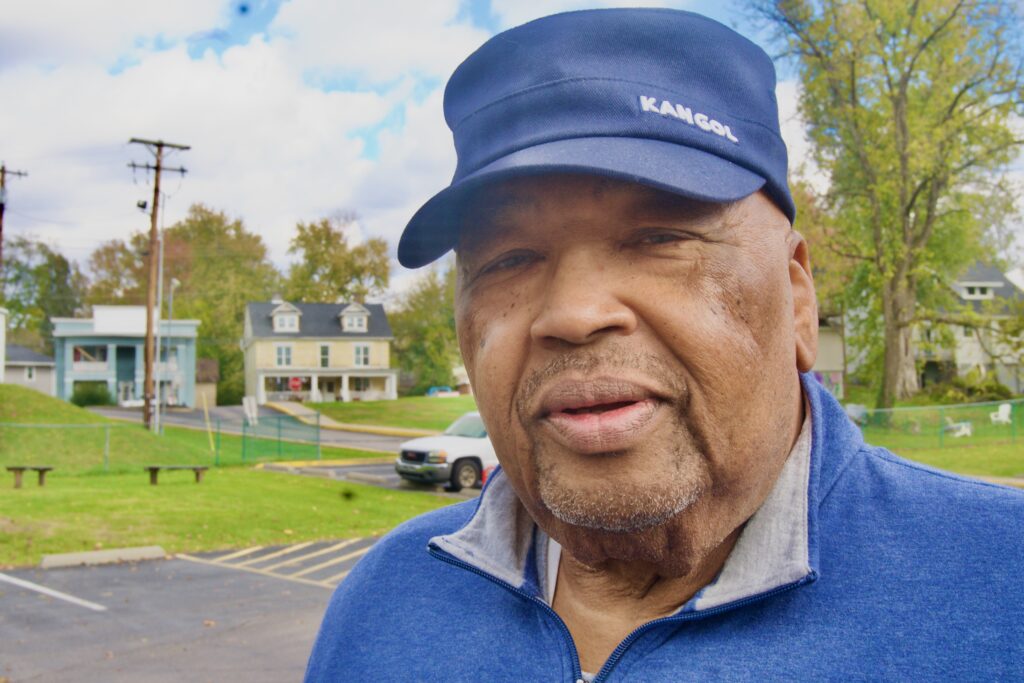
SOMERSET, KY — When Johnny Perkins was growing up as a black kid in mostly-white Somerset, Kentucky there was an order to things, a malignant moral code of separation and discrimination, a way of life most Americans have since rejected. He spent his first eight school grades in Somerset’s segregated Dunbar School. He worshipped in an all-black AME church. He accompanied friends to the Virginia Cinema on Mt. Vernon Street and sat in the balcony, apart from whites in the main auditorium.
Decades later, following the path of civil rights leaders and their moral code of justice, fairness, and inclusion, Perkins wound his way into a position of civic prominence rare in any town in America. That same Virginia Theater’s brick wall was decorated in 2020 with a painted portrait of Perkins more than 10 feet tall. It was an honor awarded by the city for his essentially being a really good guy, a man named John Livingston Perkins at birth, but known everywhere as Johnny B.
Truly, that’s the case. Yes, Perkins’ resume illustrates a life of purpose and accomplishment. He was a star athlete at Somerset High School, a Vietnam War veteran, a Postal Service carrier who rose in the ranks to become Somerset’s venerable postmaster, one of the first black men to hold that position in Kentucky.
A married father of four – three daughters and a son – he’s also an entrepreneur. He and his wife, Nellie, developed uncommonly tasty Johnny B’s recipes for barbecue sauces and seasoning rubs and prepared memorable sandwiches for all sorts of civic gatherings. Joined by two daughters, they opened Johnny B’s barbecue restaurant after he retired as postmaster in 2004. Doctors were nervous about consequences to his health from the more than 300 pounds he carried on his bulky frame, so he and Nellie closed Johnny B’s in 2010, raising a loud cry of disappointment across the entire community.
Yet even though Johnny has been a recognized figure in Somerset since he was scoring touchdowns and hitting homeruns as a teenager, his prominence in this part of South Central Kentucky is almost entirely due to his big personality, his instinct to treat everybody he meets as a friend, the civic leadership posts he’s held – AND his incredibly delicious ribeye sandwiches. He was elected to the Somerset School Board, and served on the boards of Somerset Community College, Downtown Somerset Development Corporation, Somerset-Pulaski County Development Foundation, and the annual Master Musicians Festival.
The Somerset Police Department appointed Johnny to be one of the 14 members of the department’s citizen advisory board to foster better communications with neighborhoods and residents. In 2019, Johnny was one of the first five inductees into the Somerset Community College Hall of Honor, along with Congressman Hal Rogers.
Characteristically, Johnny has long occupied a role in the city’s black leadership. He is prominent in his church, Davis Chapel A.M.E., and was the chairman of the Dunbar School Alumni Association. In the spring of 2020, after George Floyd was killed by police in Minneapolis and Breonna Taylor, a 26-year-old EMT, was fatally shot in a raid by Louisville police, Somerset’s local newspaper, the Commonwealth Journal, turned to Johnny for an assessment and assurance that would comfort the city and the region.
“Pulaski County is heaven for me,”” he told the newspaper. “I tell people ‘You’ve gone to heaven and you didn’t have to die to get here.’”
He added, “It’s an entirely different situation in a small community. Our leadership here — our mayor, county judge-executive, police, sheriff — I think they do an outstanding job. We have good people here, black, white. We’ve been judged by what we do, and that’s how we judge other people.”
All this recognition had its source in several other facets of Johnny’s life. He’s a big man with a huge heart. He’s generous and smart and loyal. He makes friends easily and keeps them close over decades. He knows everybody and remembers their names. And when he’s out of the house he’s greeted with smile and hugs wherever he goes. It’s not ephemeral celebrity. It’s real and authentic appreciation. The commendations and plaques and honors displayed in his home are metrics of his value.
“If you listen to him while he’s talking to you, if you’re not careful you will think that you are his only friend in the world,” said Jym Rankin, a lifelong friend who retired as an engineer and lives in Louisville. “He doesn’t do that on purpose. I mean, he just does it. I’ve seen him talk to people and it’s like they were old buddies from first grade. I know they weren’t because I was his old buddy in first grade. He just has that ability to interact with people.”
People reading this article probably know at least one person in their lives with such engaging personalities, such big energy fields that every place they go they are recognized and welcomed. Here where I live in northern Michigan, my friend Jack Gyr is like that. I have another friend in Charleston, South Carolina, a talented journalist and man about town named Barney Blakeney who spent much of his career writing for African American news desks. I never expect a quick trip when I’m out with either of them. Their paths are interrupted by handshakes, hugs, and warm greetings. It’s like shopping in the local grocery alongside the chair of the town board.
One more thing. No bountiful life comes without terrible events, enormous pain. Johnny endured his generation’s most torturous challenge. He returned from the Vietnam War bent by post-traumatic stress disorder. Depression followed for a long time, well into his 50s, before he finally sought guidance from Veterans Administration doctors. Nellie stayed by his side throughout. Johnny collected himself and revived the discipline and joy of his life.
In effect, Johnny has experienced enough cultural and personal turmoil to form durable and debilitating fragments of frustration. Instead it prompted him to embrace a much more expansive view of his role in this town of 12,500 residents, about 400 of them African American.
Now, 76 years into a life rich in family, friends, and local prestige, Perkins is considering the sum of his years. Johnny is a childhood friend of my wife, Gabrielle “Gail” Mattingly Gray, who also was raised in Somerset. Johnny’s mother, Jacqueline Perkins, was the Mattingly family’s babysitter for their first five children. When Jacqueline was pregnant with Johnny, Mrs. Mattingly was pregnant with Gabrielle. Jacqueline resigned and her mother, Willie Jones, became the Mattingly family’s housekeeper for decades.
I’ve been intrigued by Johnny since the moment we met a few years back. How could I not be? You shake his hand and he greets you with that big smile and bass fiddle voice. This cat is really interesting. Earlier this year I asked Johnny if I could write about him. He agreed and we sat for an interview in November.
Early Life
Everybody has a story. Some more interesting and enlightened than others. As I anticipated, our interview was absorbing and so easy. I needed only to ask one or two questions. Johnny was ready to do something else he’s mastered: telling stories. He started with Nellie, whom he married 57 years ago.
“Nellie and I grew up three houses down from each other on the same street,” he said. “I knew her before she knew who she was. When she turned 15, I saw she wasn’t a boy, so I said, ‘Oh, man, she looks good.’
“Back then chivalry wasn’t dead. When you went to date a girl, the father would say, ‘Young man, what’s your intentions?’ And of course you lied. But she had two older brothers. I had to wait a couple of years in order to whip her brothers before I could date her.”
Nellie at 15 was a striking beauty, much loved in her community, and a star sprinter on the Somerset High School track team. Johnny was 17, really put together at six feet and one inch, 180 pounds. They made a magnetic couple in the school halls, in the sports stadium, on the street.
Johnny was the oldest of seven children – five boys and two girls. Though they lived modestly, the Perkins family was well known in and outside the black community. “I had a guy tell me one time,” said Johnny. “He said, ‘You all are the richest black family in Pulaski County.’ Well, hell, there were seven of us. We didn’t have anything. But we were known in this community. Our mom would take me and my younger brother, Jeff, to a store called Salutsky’s at the beginning of the school year. You got three pair of pants, got three shirts, and you got a pair of shoes. They lasted all year. First thing you did when you got out of school, you took your school clothes off and you put your work clothes on.”
His grandfather, nicknamed Tink, was the maitre d at the all-white Somerset Country Club. Pulaski was a “dry” county at the time, banning all sales of alcohol until the law changed in 2012. Tink spent part of his time as a bootlegger, developing routes of supply and earning the loyalty of the city’s wealthy and connected by privately providing whatever booze they needed. Tink stored liquor in a safe place on the premises.
Johnny’s father, John B. Perkins, was a maintenance worker for the State of Kentucky. “I asked him once,” said Johnny, “what’s the B stand for?” He answered, “You damn fool. Just B. That’s what it is.” So John L. Perkins became Johnny B. because everybody assumed he was a Jr.
Like his father, John B. was garrulous and spirited and trusted. He was an active Democrat, and when the governor’s mansion changed parties, John B. lost his job in 1962.
“Dad couldn’t find a job because of his political affiliation,” said Johnny. “Him being a black Democrat. So he was kind of blackballed as far as getting a job.
“After he lost his job at the state he started bootlegging for the judges and the attorneys here. One time, he and my uncle from California come to pick me up at college. I get in. There’s cases of liquor on both sides of me, under my feet, the old bench seat up front where dad was driving. My uncle John is sitting by the door. Liquor on the other side of him and under Uncle John’s feet.
“We come off the highway coming into Somerset and a state trooper puts his lights on us. There’s a little roadside park there and daddy pulls over. Back then I had migraines all the time, so I get sick. I’m throwing up out the back window. I know we’re going to jail.
“State trooper pulls up behind us, gets out, puts his Smokey the Bear hat on, and walks up. Daddy rolls the window down. The trooper looks in, looks around. He said, ‘John B, where are you going?’ Daddy said, ‘I’m going to Somerset.’ He tapped daddy on the arm, and he said, ‘Be careful.’
“My uncle from California, he cussed. He raised hell. He said, ‘I’ve never seen any shit like this.’ But what he didn’t know, and what I didn’t know, Daddy was taking the liquor back to the judges and lawyers. The trooper knew it, yeah. That’s the way it worked back then.”
Air Force and Vietnam
Johnny B. graduated high school in 1967 and was recruited to play baseball on a scholarship to Eastern Kentucky University. His youth. His free spirit. And the fact that he never was much interested in academic achievement made his college career brief. He was 19 when he returned to Somerset. Nellie was 17. They married and had their first child, a daughter named Beverly.
The new responsibilities shifted his priorities dramatically. He was awarded a scholarship to attend Somerset Community College, play on the college’s first basketball team, and graduate with an Associate’s degree.
He found work where it was available.
“I knew the preacher at First Baptist Church, the white First Baptist Church,” Johnny said. “I graduated with his daughter. He said, ‘Johnny. Do you need a job?’ I said, ’Yeah, you know, I could use a job.’ So he let me come in and clean the church. He let me do that and get my 40 hours in any way that I could.
“The thing I really liked about that was on Wednesdays the Baptist church would always have prayer meeting. The guy that I worked with was Willie Gaines. He was a heck of a cook. So he would always cook for the congregation on Wednesday night. Everything that was left over, he and I split. I’d take it home so we had at least one good meal during the week. They were a blessing to our family.”
“It’s why I say Somerset is unique, even with all the racial strife back then. There were a lot of good folks here. And I was always fortunate that my dad and my granddad and my grandmom, my mother, knew a lot of people. I think, for lack of a better word, your pedigree had a lot to do with it.”
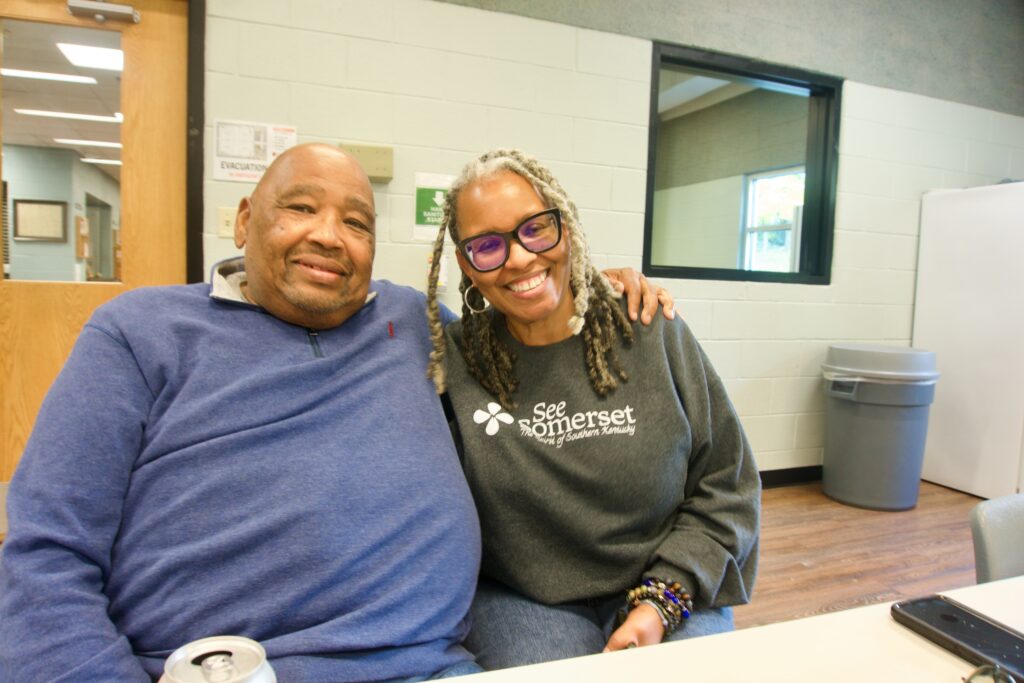
In 1970 the Pentagon was still actively drafting recruits and Johnny had a low number in that era’s draft lottery. He received a letter to report for a physical in Louisville, a couple hours northwest of Somerset. A lifelong asthmatic who also developed regular migraines, Johnny didn’t want to join the military. He sought help from a Somerset physician who employed his mother.
“I told him, ‘I’ve got a wife and kid, I don’t want to go.’ He gave me a note and said, ‘Put it in your pocket. When you get there and they start the physical you pull it out. He said, ’They won’t take you.’”
“Well, there were eight of us that went. So when we get to Louisville, out of the eight of us, only two passed the physical, me and another guy.”
Recognizing the military would provide a regular paycheck, Johnny changed his mind. “I never did pull out my paper. I came back and I told Nellie, I said, ‘This might be the best thing for us.”
Johnny’s military career in the Air Force lasted – he counts them – three years, eight months and 12 days. That included 14 months in Vietnam where he was assigned to the front lines to call in air strikes. His breaks from the war included traveling in Asia with Air Force teams to play basketball.
Military service provided a solid experience on his resume. But the dread, the fear, the men he knew who were wounded or killed; the psychic trauma took its toll. “What people don’t realize when you go to war. It’s hell. Killing anything that moves. You’ve done things. You’ve seen things. People don’t know the price you pay.
“I returned and a lot of times people will say, ‘Well, you’re lucky. You came back.’ They put me on Zoloft for PTSD. I wouldn’t take it, being a young black man. Hell no. That’s a sign of weakness. I’m not taking that shit.”
Postal Career and More
Instead Johnny went about his business. He landed a job with the U.S. Postal Service and thrived. “I was a letter carrier for 15 years. I was what you would call a swing man. I carried everybody’s route on their days off until I got a route. That route was 12 miles long.
“Back then junk mail and book rate was the lifeline of the Postal Service. Your bag was heavy at the start. I worked 118 days in a row when I first got hired. Saturday, Sundays. A typical day for me, you go in at midnight. You work until about six o’clock, until you get the mail out. We’d go home, come back about four, work until about eight.
“Man, I was working 12, 14, 15 hours a day. Get off at eight, go home, do what you needed to do, and you back in there at midnight. And you know, you didn’t complain, because I remember when I got hired, I told Nellie, I said, ‘Girl, if we can make $4 an hour, we’ll live like kings.’ I made a lot more than that, but we still didn’t live like kings.”
He and Nellie had three more children. And when they came of age for college Johnny increased his annual earnings by holding regular social events in their home for friends and professional contacts to gamble with dice and cards. Johnny set up tables and chairs on their ground floor, provided great food, and the liquor flowed. Designated drivers were available.
“I did what I thought was best for the financial stability of my family,” he said.
Learning from the gambling he’d done in Vietnam, Johnny took a financial cut from the pots. “I had three tables going. I was averaging on the table, $60 an hour. That’s $180 an hour. I’m taking care of my mom, my brothers, you know, just kind of giving money away to keep Uncle Sam off of me. People knew. If you come I’m gonna feed you all you can eat. I mean, bring your kids. They can go upstairs and out in the yard and play. It was a social event, but money was involved.”
By then Johnny had been elected the first black member of the Somerset School Board and served for 14 years. His career was gaining momentum at the Postal Service. His kids were thriving. And his prominence was rising in the community.
Trouble
But there was mounting turmoil in his mind. Johnny was keenly aware that his emotional balance was not always secure and stable. The trauma of his military service drained his energy and sapped his spirit. Nellie bore the burden of Johnny’s struggle. She carried the invisible wounds of his frontline horror.
One day, late in his run as postmaster, Johnny had a terrible confrontation with one of his carriers. They nearly came to blows. “I knew something was wrong. I went home, and I told Nellie, ‘I gotta get away.’”
A friend at the post office told him about the Veterans Administration’s expertise in stress and trauma. It was 2004. He sought help from the V.A.
“I saw a guy named Ivan. I’m 55. I don’t cry. I’m a hard son of a bitch, you know. He walks in, he introduces himself. I sit down. He starts reading me. It’s like he’d been in my pocket from 1973 to 2004. So you’re talking about 31 years.
“I get scared. I jump up out of the chair and I say, ‘How in the hell do you know about me?’ He said, ‘There’s a lot of you all out there.’ He said, ‘The only way that you all feel alive is by living on the edge.’
“I started crying. I started crying because I put Nellie through hell. I wouldn’t have had a family if it hadn’t been for her. I settled down, and I asked him, I said, ‘Can I bring my wife in here, not to justify what I’ve done, but for you to explain what’s going on.’
“The same medication that I wouldn’t take in ’73, they put me back on it in 2004 at a higher dose. It kind of smooths me out. I have days to where I don’t go out. I run my mouth a lot, but there’s days when I get up, I’ll shower, I’ll go to the sun room. I’ll read. I do a lot of reading, listen to a lot of jazz.”
Johnny B’s Barbecue
After retiring from the Post Office Johnny got interested in food service. He and Nellie served ribs, ribeye, and pulled pork at local events. In 2007, assisted by two daughters, Kathy and Beverly, the Perkins family opened Johnny B’s, a barbecue restaurant. In the first weeks after it opened friends arrived, spending hours to help. Jym Rankin, James Coffey, Jo Ann Cunningham, to name just a few.
Johnny B’s was popular not only because of the menu options but also because when Johnny was there he held court with customers. Going to Johnny B’s when the co-owner was in attendance was a party.
His doctors, though, worried that if he kept working, spending so much time on his feet, Johnny’s diabetes might cost him his legs. He and Nellie closed the restaurant in 2010. Not much later his oldest son, John Jr., a successful non-profit executive, called his father with an announcement and an idea.
First, he told Johnny B that he had quit his job. Second, he called on his father, by now among Somerset’s most prominent citizens, to establish a legacy in food. “He told me ‘Dad, in order for us to leave a legacy for our family, we need to start a business of our own.’” John Jr. suggested building on the barbecue restaurant experience and develop branded barbecue sauces and seasonings.
The conversation, memorable for its economic significance, also was distinguished by how it was shaped by years of distance between father and son.
“We weren’t even speaking when he was a sophomore in college because I’d been so hard on him,” said Johnny. “I was old school. I wanted to be hard on him because I wanted him to be a better man than me. I hugged my daughters, pulled them to me. With him, that was that tough love.
“We’re getting over it. We’re sitting in the basement one Thanksgiving, his junior year, and I looked at him. I said, ‘John, you know I love you.’ He said, ‘No, you don’t. You never have. You’ve always used me as a negative example.’
“And I told him, I said, ‘Man, that’s the way I was raised.’ I said, ‘My dad never told us boys that he loved us. We knew he did.’
“I told John, “My mail route took me by my father’s grave every day by the cemetery. I made up my mind. I said even it wasn’t apropos for a man to tell another man that he loved him. But everybody that I love I’m going to tell ‘em.
“I said to John, ‘I love you.’ We talk maybe once a day now. I learned the hard way.”
Johnny took to the new barbeque venture like a draft horse pulling a wagon. He spent time in Chicago sampling sauces at the city’s barbecue restaurants. He developed a basic understanding of what he wanted to do, and he and Nellie began experimenting with recipes. They served them to Johnny’s younger brother, Dwight Perkins, who provided taste guidance.
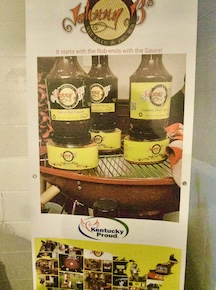
Within a year the family had developed the superior Johnny B’s barbecue sauce, a delightful convergence of sweet and tangy. John Jr. helped with developing relationships with contract manufacturers and with marketing. The state helped with its Kentucky Proud marketing program. In what seemed like no time at all, Johnny B’s was on the shelves of Kroger and Meijers and Liquor Barn.
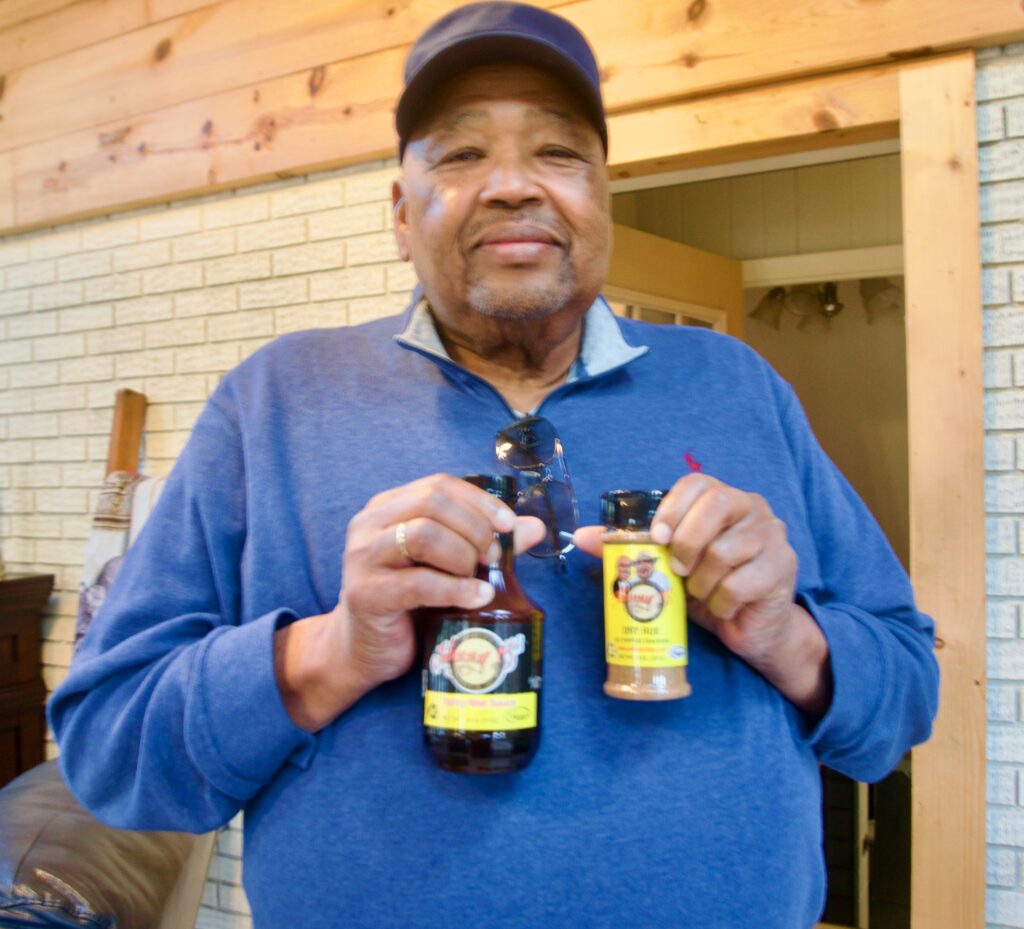
More than a decade later, Johnny B’s four barbecue sauces and two rubs are marketed by the family-owned Performance Foods, processed in Louisville, and sold in 400 stores in seven states. Nellie is the president. Five more products are in development.
The family’s next venture is to open a processing plant in Somerset. It’s in the early stages of development. It would be a stable place of employment, help brand Somerset, and be another durable gift from Johnny to his beloved home town and this part of Kentucky.
“All my history is mine,” John said. “Me. My wife, my kids and grandkids grew up here. Whatever little I’ve accomplished hadn’t been the black man only. It’s been the black and the white man. I’ve had God put people in my path. What I’ve accomplished in my life, my family, the post office and other places. It’s because of the folks, black and white, that were raised here.”
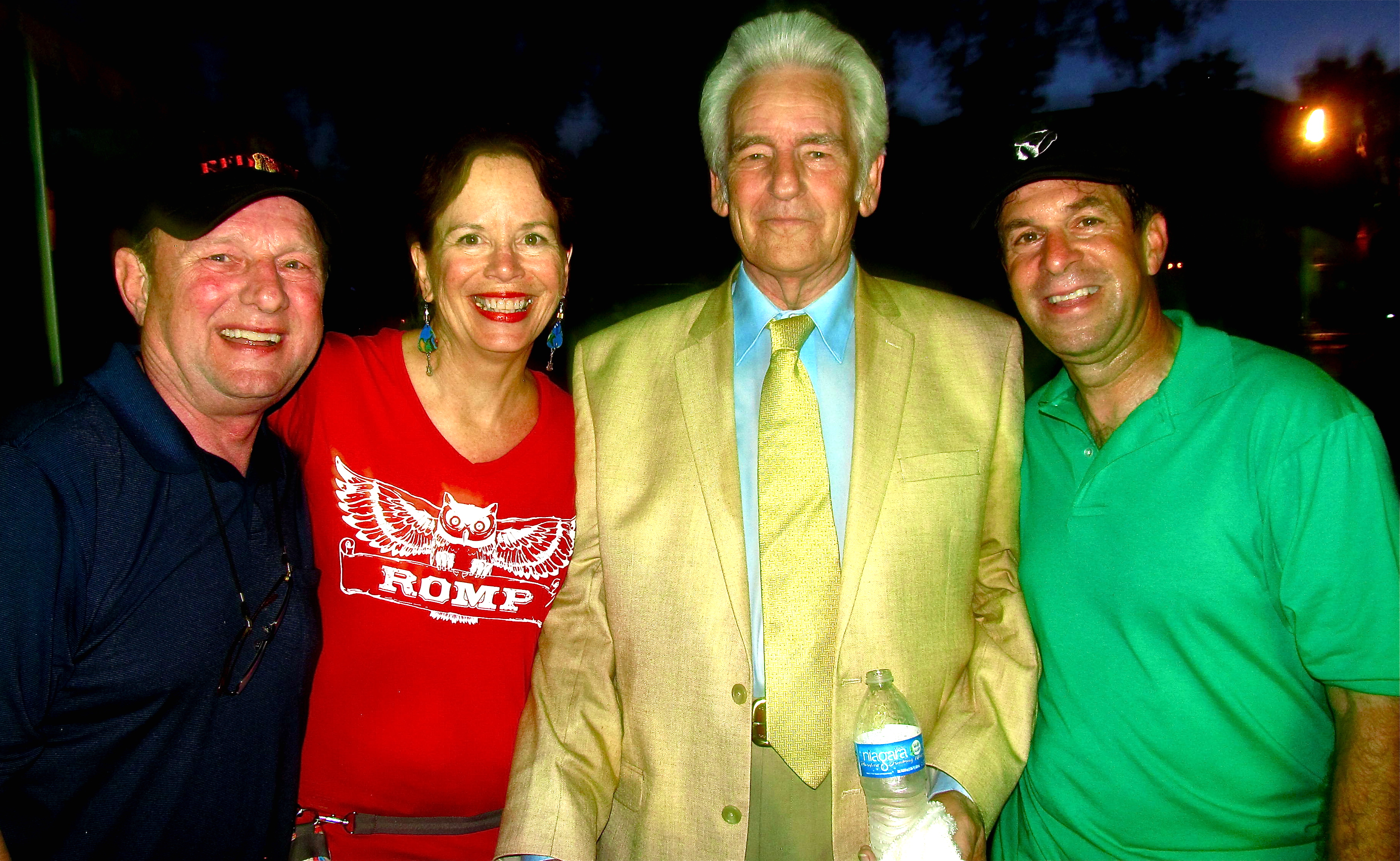
Keith’s accomplishments speak for him. I’m humbled that he took time out of his busy schedule to write about me and my family. He and his wife, Gabriel are a blessing to whom ever they meet. Much love and respect from the Perkins family.