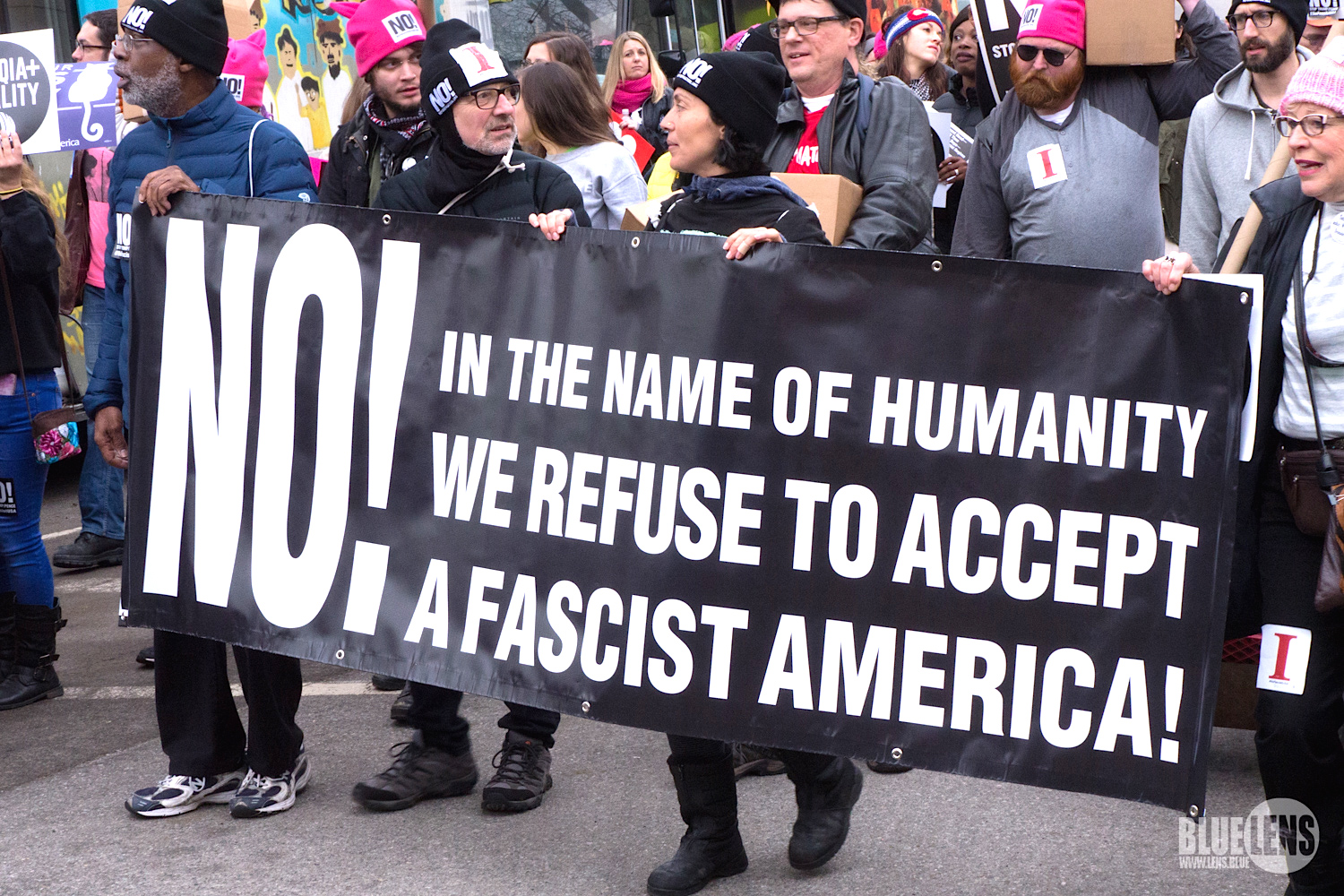
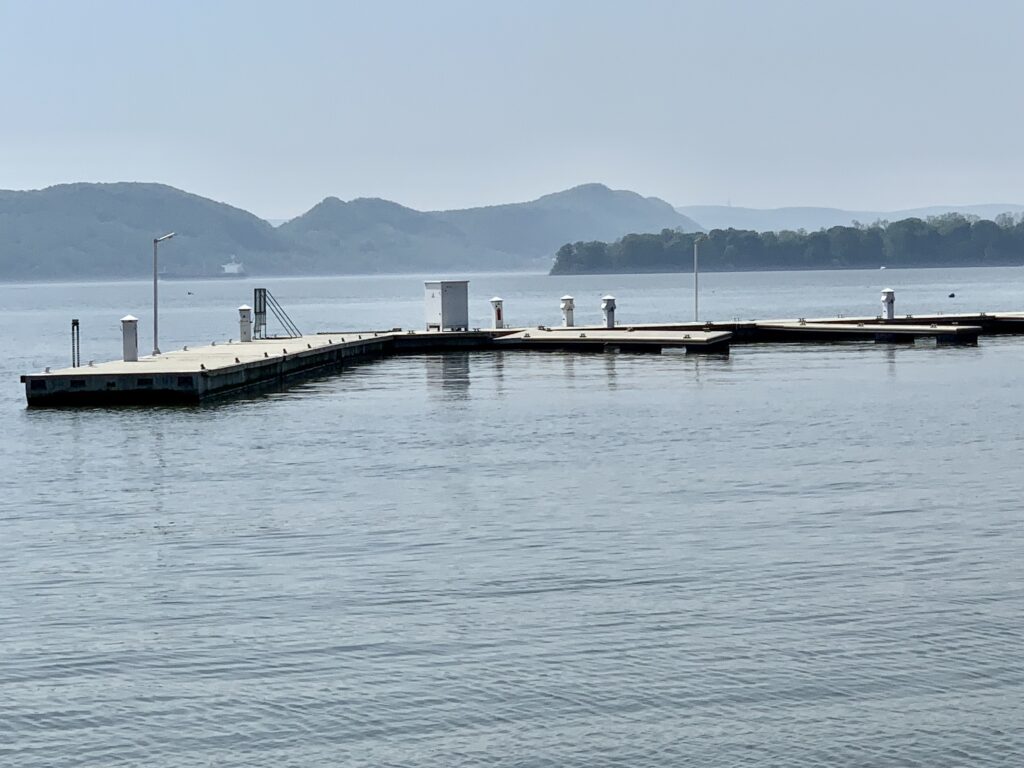
America’s alliance to a cleaner environment. (Photo/Keith Schneider)
Let’s all stand up and cheer our fellow Americans in the West for raising their voices and shutting down a Republican plan last month to sell millions of acres of the public domain. Even considering Earth Day demonstrations in April, it’s the first time any of the Trump administration’s irrational and dangerous initiatives to impede, weaken, and obliterate the nation’s protections for land, water, and air generated more than a peep of resistance.
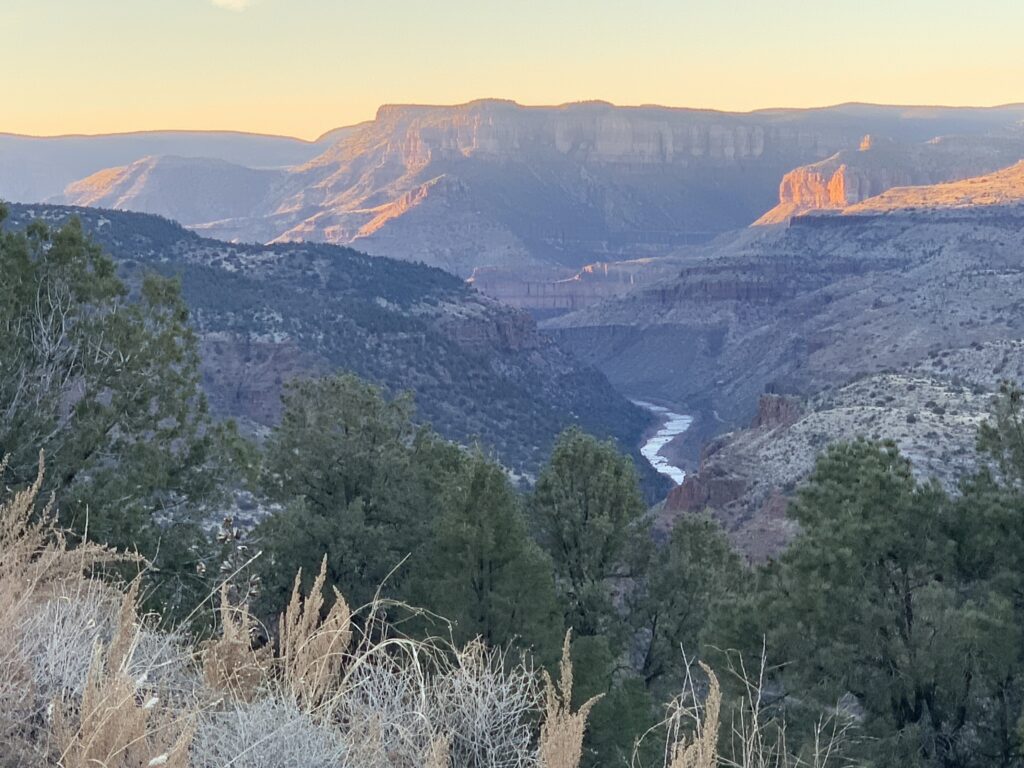
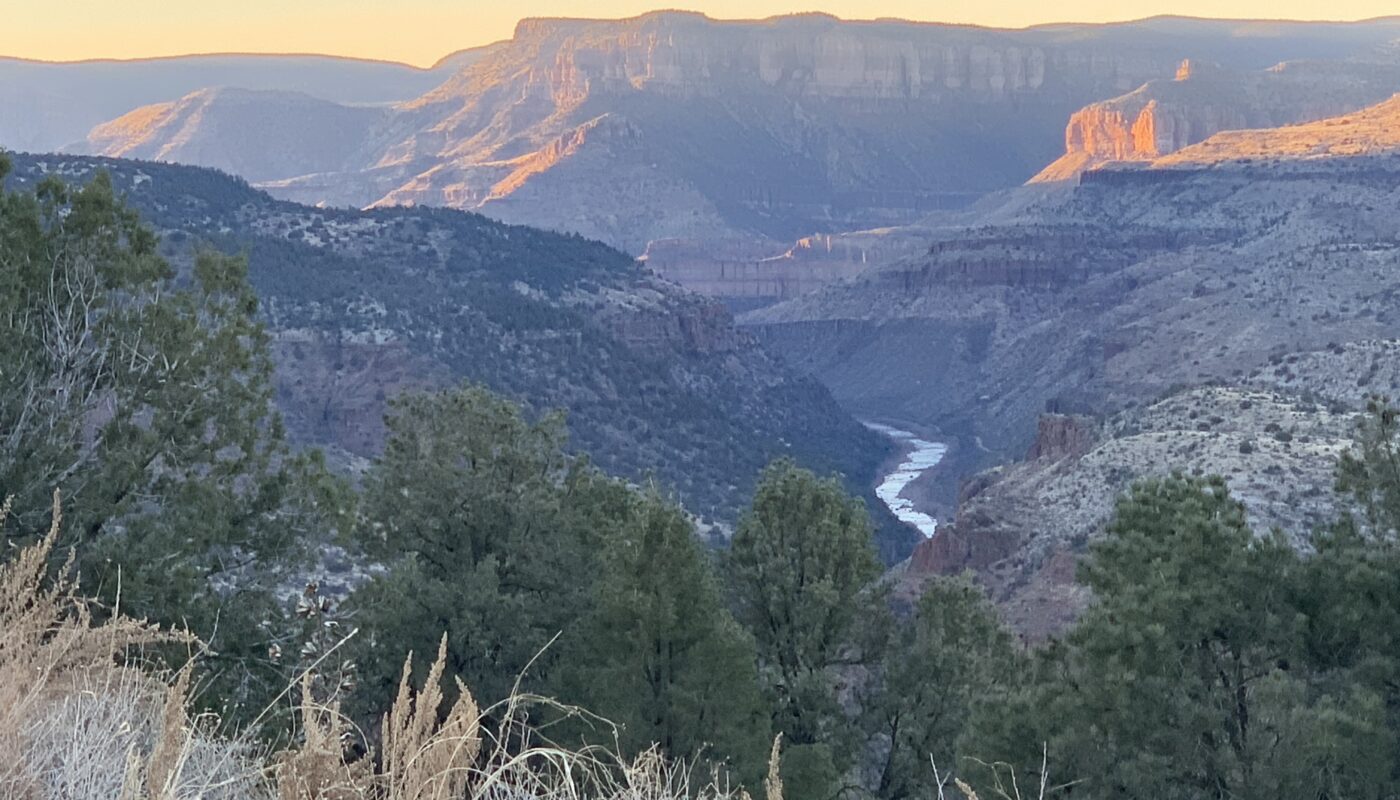
like Arizona’s Salt River Valley. (Photo/Keith Schneider)
Where has all the outrage gone?
How many of America’s seminal statutes to safeguard the environment will be bludgeoned by the Trump administration and his allies in Congress before Americans resist?
For the time being, opposition to the administration’s diabolical work to increase pollution and develop wildlands is barely recognizable, hardly a blip on the radar screen of policy outrages fostered by the president. Almost every one of the country’s foundational environmental laws, enacted since 1970, is under attack:
- Coal-fired power plants are being allowed to increase emissions of mercury and other toxic pollutants, a rewrite of a Clean Air Act provision in place since 1990. Similarly, auto tailpipe emissions limits are being relaxed.
- Millions of acres of flood-preventing wetlands that previously were protected under the Clean Water Act are now free to be developed for farming, industry, and residential development.
- The Endangered Species Act, the most powerful conservation law in the American ecological protection arsenal, is being rewritten to allow wild habitat that sustains threatened plants and animals to be developed and ruined.
- Northern Alaska wildlands are being opened to new oil and gas development.
- Congress just approved legislation to kill the country’s federal investment in wind, solar, battery, and electrical vehicle development, which not only puts Americans in harm’s way of climate change-influenced storms, and air and water pollution, but essentially cedes leadership in two of the century’s largest new industries to the Chinese.
Protections Are About to Disappear
There’s more. Much more. All the federal agencies charged with enforcing environmental protection are being stripped of their expertise and authority by profound reductions in budget and personnel. If Congress adopts the president’s miserly spending proposal, after September the Environmental Protection Agency will lose more than half of its budget and 1,274 staff members, a 10 percent cut.
Additionally, the administration is killing science and research programs at every federal agency charged with gaining greater understanding — and developing more effective responses — to horrific storms, disastrous flooding, ever-more devastating wildfires, warming ocean temperatures, acidifying oceans, species genocide, and so many other changes in the Earth’s operating system prompted by industrial development.
What Trump and Congress are executing, in full view, is the most brutal assault in U.S. history on the interlocking laws and regulations that have made America cleaner, safer, and more prosperous. Yet there is no focused outcry from any region, any prominent leader, almost any group, to an attack that will make the country dirtier, more polluted, and less safe. Even the New York Times, which has served for half a century as one of the country’s most persuasive allies of our environmental standards and practices, isn’t paying sufficient attention.
Oh No! Even the Times
On July 13, Peter Baker, the Times’s chief White House correspondent, published an analysis of Trump’s “reverse button on decades of change.” The nearly 2,000-word article failed to note the president’s hostile takeover of environmental policy, a generational shift in direction every bit as crucial to American well-being as what he’s doing to increase tariffs, deport immigrants, and bring stellar universities to their knees.
Very clearly, the president has evaded what, in other eras, would be a torrent of environmental opposition. But because his plan of attack encompasses changes of policy in law and regulation that are opaque to most Americans, and because those alterations don’t result in immediate, visible consequences, the president faces little pushback.
Except in one case so far: selling chunks of the West’s public domain.
Lee Rebuffed
The consequences of divesting millions of acres of forests and high desert would have been immediately apparent. The proposal by Sen. Mike Lee, a Utah Republican, was straightforward and easily digested. Facing an immediate threat that people west of the Mississippi River could lose access to treasured real estate where they fished, hunted, hiked, and camped finally motivated Americans to resist.
Reducing the size of the Western federal domain has stirred ranchers, miners, and farmers for decades. From the mid-1960s to well into the 21st century vigilante groups like the Posse Comitatus, Sagebrush Rebellion, and Wise Use Movement formed to support state efforts to take control of federal land.
Sen. Lee, the MAGA firebrand and an acolyte of Supreme Court Justice Samuel Alito, for whom he served as a law clerk, saw an opening to revive the idea with Trump’s election. He tried to insert a measure into the president’s big policy bill on June 11 to pull 3 million acres out of the West’s public domain. His rationale: solving the nation’s housing shortage.
Twelve days later, thousands of citizens showed up at the Western Governors’ Association meeting in Santa Fe to protest the proposal. New Mexico Gov. Michelle Lujan Grisham, a Democrat, condemned Lee’s plan, as did Republican lawmakers from Montana. On June 28, Lee pulled the legislation from Trump’s policy and tax bill.
The country requires the same focused resistance to the many other administration schemes to tear down the statutes and rules that have accomplished what is — along with the civil rights movement — arguably the greatest American public interest achievement of the last 60 years. Hundreds of millions of acres were protected as wilderness. Rivers and bays were scrubbed of municipal and industrial waste. Breathable air became the standard in American cities. Toxic waste dumps closed and were cleaned up. Threatened plants and animals were saved. Coal-fired power plants closed and clean energy technology is now supplying most of America’s new electrical demand.
And as America got cleaner, it got richer. The greenest regions of every state are typically among the most prosperous. In 1970, at the start of the EPA, America’s gross domestic product was $1.1 trillion, or $9 trillion in current dollars. Today the GDP is $30.3 trillion, more than three times larger.
It’s hard to imagine an environmental policy agenda that is more foreboding, more dangerous for the safety and prosperity of Americans than the one Trump is pursuing. The climate change hazards alone are self-evident. We see it everywhere. Hurricanes are more powerful, more numerous, and have already drowned Florida’s west coast cities, Houston, New Orleans, and New York. A terrible flood just washed away over 200 people in Texas. Another flood last year decimated parts of North Carolina and Tennessee. Rising seas regularly inundate the Atlantic coastal cities of Charleston, Miami, and Norfolk. Wildfires whip through Los Angeles. Wildfire smoke is suffocating and burning the lungs of residents in the West and blowing across the continent on hot winds that shorten the life spans of everyone breathing its toxicity.
America! Wake up! Our international reputation, our country, our communities, our lives, our children’s lives are under monumental threat from a president seeking to pollute America again.
— Keith Schneider