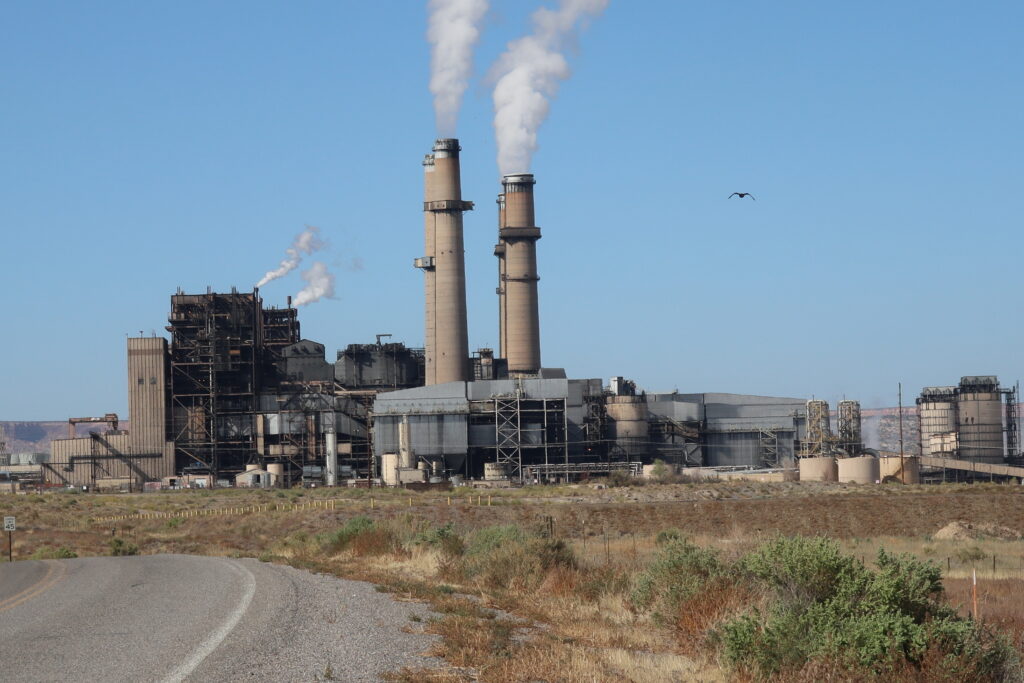
Not so terribly long ago the International Energy Agency issued one of the early century’s most optimistic projections for the environment, human health, and water quality. It declared 2013 the year the world’s operating coal mines had reached peak production of 8 billion metric tons.
From that year forward, the agency predicted, the use of the dirtiest fuel to generate electricity would steadily decline, carrying with it planet-healing reductions in climate-changing air emissions and water-polluting discharges.
At the time, the IEA forecast appeared sound. Circle of Blue was one of the select group of news organizations and research groups at the global frontlines, witnessing in person how coal-fired power was being replaced by much cleaner electrical generation from wind, solar, and hydro.
In China we found the Central Government building new clean energy plants to quadruple wind and solar generation. In India, a plan to build a fleet of 15 immense 4,000-megawatt coal-fired plants collapsed while utilities were busy installing wind and solar installations at a frantic pace. In the United States, coal production actually did peak in 2008 at 1.2 billion tons and started a steady descent that pushed over 290 coal-fired generating stations out of business and will send coal production to under 500 million tons this year.
These trends converged in Paris in 2015 when 195 countries signed a legally binding international treaty on climate change to reduce greenhouse gas emissions and attempt to keep global temperatures from rising to more dangerous levels. Heads of state celebrated the treaty as a towering moment of human cooperation and progress.
The Paris Climate Agreement seemed well-positioned to join the 1963 Nuclear Test Ban Treaty (halting atomic explosions above ground that contaminated the atmosphere) and the 1987 Montreal Protocol (ending use of chemicals that damaged the ozone layer) as one of the three most significant environmental treaties ever negotiated.
Progress Dims
Almost immediately, all the hope, the delight of accomplishment, the sincere fervor of change drained from the Paris Agreement. China accelerated construction of coal-fired plants to supply its titanic energy demand. India followed. Global coal production rose an average of 70 million metric tons a year and hit a record high in 2024 of more than 8.7 billion metric tons.
Stoked by billions more tons of carbon emissions from coal combustion, global temperatures are rising, more powerful storms are inundating communities, deeper droughts threaten the planet’s supply of food.
Amid the discouraging and dangerous trend, the U.S. stood out as a beacon of responsibility and hope. Coal production dropped. Clean energy generation increased. Our air and water got cleaner. Much cleaner.
Until now.
Trump Attacks Reason
Donald Trump has set out to wreck real progress in U.S. electricity markets. Like the other inane, unreasonable, irresponsible environmental measures Trump has proposed to injure America’s well-being, he’s determined to stop one of the most stunning industrial transformations in our history.
Since 2013, the U.S. has steadily pushed coal production and combustion down, closing old plants and reducing coal’s share of electricity generation from over 50 percent to 16 percent. At the same time, production from clean sources – wind, solar, hydro – doubled and now accounts for 21 percent of the nation’s electricity. Before Trump’s assault, water consumption to cool coal-fired plants, once one of the largest users of fresh water in the country, was on the path to be cut 68 percent by 2035, according to the Environmental Protection Agency.
The president’s plan is to burn down over a decade of policy and investment that was pushing coal-fired plants to join horse-drawn wagons, sails, and steam engines as industrial tools that were essential at the time but now have outlived their usefulness. The basis of his plan is an array of ideological and arrogant changes in policy, regulation, and investment that start here in Michigan and the Midwest.
First, he wants to allow coal-fired plants to evade existing air pollution rules and pour more mercury and other toxic compounds into the air. The thought is to make coal-fired power plants cheaper to operate. The consequence is more mercury in fish and more air pollution.
Second, Trump is challenging state climate change and clean energy laws that he asserts will raise costs or hamper operations at existing coal-fired power plants or impede construction of new plants. One target is Michigan’s climate law that requires 100 percent clean energy electrical generation for utilities by 2040.
Third, Trump and his congressional allies want to dismantle federal grants and tax credits approved during the Biden administration that are stimulating clean energy and electric transportation development in the U.S.
And fourth, in a merciless display of policy inanity, the president has ordered old coal-fired plants scheduled to be closed to keep operating. Two are in Michigan. Consumer Energy’s 1,420-megawatt J.H. Campbell power plant in West Olive was scheduled to close on May 31 after 63 years of operation. In early June the U.S. Department of Energy ordered the plant to stay open. DTE’s 3,400-megawatt Monroe generating station south of Detroit, the fourth largest coal-fired plant in the country, was scheduled to close in 2028 after 57 years of operation. It, too, was ordered to remain operating. The administration asserts the need is paramount to avoid an “energy emergency.”
Nobody but Trump Wants More Coal
Utility executives and leaders of the Michigan Public Service Commission, which regulates power plants, say such reasoning is nonsense. The old facilities release high levels of carbon dioxide, sulfur dioxide and particulate matter into the air. The state also has a surplus of electrical generation and has been encouraging development of much cleaner sources, including nuclear power.
In addition, keeping the old plants operating will add significantly to operating costs and raise electricity rates for businesses and residences. Consumers Energy says closing the Campbell plant would save ratepayers about $600 million by 2040. The Michigan Public Service Commission agrees. “The unnecessary recent order will increase the cost of power for homes and businesses in Michigan and across the Midwest,” said Dan Scripps, the chair of the MPSC, in a statement. “We currently produce more energy in Michigan than needed. There is no existing energy emergency.”

Perhaps nothing better typifies Trump’s strange and malignant goals for energy, water, air quality, and public health than the lunacy of keeping obsolete and polluting power plants operating. It makes you wonder what would have happened if he was president in 1900. Block a nascent automobile industry to aid horse-feeding oat farmers… and bury communities in three feet of manure?
—- Keith Schneider