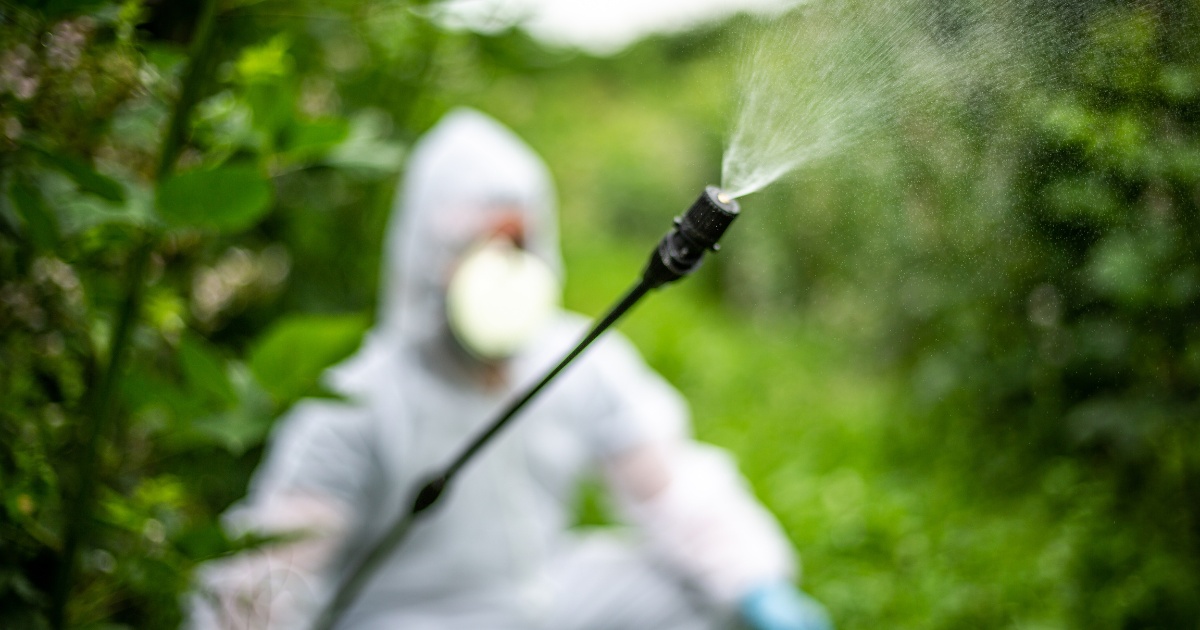
Top executives of Bayer, the German chemical maker, were understandably elated on June 25, the day the U.S. Supreme Court ruled in their favor in a product injury case involving the company’s Roundup herbicide. The high court reversed a state court decision and dismissed the legal theory that prompted a jury to award $1.25 million to a Missouri man who accused Roundup of causing his non-Hodgkin’s lymphoma.
“This decision is good for American farmers who help feed the world,” said Bill Anderson, Bayer’s chief executive. He added: “The decision brings overdue justice on an issue that should have been clarified much earlier. It’s time to put it behind us.”
Not a chance. Bayer still faces over 60,000 pending cases filed by people who were exposed to Roundup and assert the weedkiller caused their cancer, and several hundred new cases are expected annually for at least another 15 years. The science that Roundup causes cancer is getting stronger.
In real world terms, Bayer joins other corporate behemoths in American agriculture in contending with the most aggressive scrutiny and accountability for their technology, production, and marketing practices since Upton Sinclair published The Jungle.
His 1906 novelexposed such horrific unsanitary conditions in Chicago’s meat packing industry that it prompted Congress to mandate strict government inspections of livestock before and after slaughter and set sanitation standards for processing plants. Congress also approved the Pure Food and Drug Actthatoutlawed the sale of harmful foods and established the Food and Drug Administration to administer the new law.
Very quickly across the country, similar public fervor is developing around the hazards of agriculture. Roundup, the best-selling farm chemical in the world, is a factor in new activist energy that includes the Federal government’s anti-trust investigations of farm sectors, states levying new restrictions on toxic discharges from animal operations, and civic disgust over farm practices that have pushed cancer and water pollution to top-tier election issues in Iowa, one of the most important farm states.
In other words, for the first time in over a century the farm sector’s biggest companies are encountering intensifying clamor for accountability for how they produce and market their products, as well as how they affect human health. It’s too early to tell whether the civic pushback amounts to a resistance movement as powerful as it was in the early 20th century. But if it does, the result could be significant improvements in water quality, environmental conditions, lower rates of human disease, and safer food at fairer prices.
Movement For Change
Here’s what’s happening. John Deere, the big farm equipment maker, just settled a case with the Federal Trade Commission and five states to give farmers the right to repair their own John Deere tractors and equipment. The FTC and the states — Arizona, Illinois, Michigan, Minnesota, and Wisconsin — challenged Deere’s unlawful policy to force farmers to use authorized dealerships and keep lucrative repair, diagnostic, and service fees inside the corporate network.
Deere is now required to provide farmers and independent shops with the same repair equipment, including applicable software, that it provided solely to Deere dealers. Both the federal and state governments, and the thousands of farmers they represented, said that ending the Deere powerplay reduced their costs and will lower consumer prices.
In another case, the U.S. Department of Justice opened a formal antitrust probe earlier this year into how Tyson Foods, Cargill, JBS USA, and National Beef Packing engaged in anti-competitive marketing and pricing practices that are contributing to rising beef prices. The four companies collectively control roughly 85 percent of the U.S. cattle market — up from just 25 percent in 1977.
In a third case, the Department of Justice is investigating fertilizer companies for illegal production and distribution practices involving price-fixing, restrictions on production, and cornering markets. The federal antitrust investigation was prompted by class-action lawsuits filed by farmers against Nutrien Ltd., The Mosaic Company, CF Industries Holdings Inc., Koch, and Yara International ASA. Farmers accused the companies of coordinating production and supply to keep nitrogen, phosphate, and potash prices artificially inflated since 2021.
In July 2024 the Michigan Supreme Court, in a case involving managing millions of tons of manure from large dairies and other animal production facilities, ruled that the state Department of Environment, Great Lakes, and Energy (EGLE) had full authority to regulate how fecal deluge is managed. EGLE followed the ruling with new rules it issued three months later that much more tightly controlled manure spreading and requires the state’s 290 large animal feeding operations to meet state water quality standards.
Lastly, the myriad environmental and health hazards of industrialized crop and livestock production has galvanized voters and are now signal political issues in Iowa, where water pollution and cancer are top tier campaign issues in races for governor, agriculture secretary, and state House and Senate seats.
Bayer’s Liability Remains
Bayer is being swept up in the national tide of civic unrest about agriculture’s irresponsibility. The Supreme Court decision won’t throw the company a lifejacket. The primary reason is that Bayer focused its defense of Roundup not on the chemical’s potential to cause cancer but on the legal strategy deployed by plaintiffs’ lawyers.
Bayer argued that the U.S. Environmental Protection Agency does not consider Roundup to be carcinogenic. Therefore the federal label directing how Roundup should be applied does not required a cancer warning.
The Supreme Court, by a 7-2 margin, agreed and essentially nullified the “failure to warn” argument used in most of the Roundup damage cases that have cost Bayer well over $14 billion since the first case was filed in 2018. It’s the most expensive product liability litigation ever in U.S. agriculture.
More lawsuits are on the way because the Missouri jury, like other state juries that awarded damages in Roundup cases, found that reams of scientific evidence show that Roundup does indeed cause cancer. The newest studies support that conclusion. Dennis Weisenburger, a respected pathologist at the University of Nebraska, reviewed five years of new literature and found continued evidence linking glyphosate-based formulations to non-Hodgkin’s lymphoma.
Plaintiffs’ lawyers are developing new legal strategies and Bayer has already proposed establishing a $7.25 billion fund to settle anticipated new lawsuits.
Bayer is a central player in the rise of industrialized agriculture in the U.S. Its Roundup herbicide reduced labor and planting costs for individual farms after it was introduced by Monsanto in the mid-1970s. In the late 1980s and 1990s, Monsanto scientists figured out how to insert genes into corn, soybeans, cotton, and other crops to make them resistant to Roundup’s plant-killing capacity.
That eliminated the need to clear weeds with farm equipment, saving farmers money on fuel and reducing wear and tear on their tractors. Sales of Roundup soared. Another triumph of science and ingenuity increasing efficiency in agriculture.
That’s one way to look at Roundup’s story. Here’s another. Roundup influenced increased production of genetically engineered corn and cotton, the most polluting crops.
Cotton requires the heaviest applications of pesticides of all crops.
With higher profits for genetically modified seeds, corn farmers increased seeding to achieve higher yields. Corn seeding rates are up around 50 percent since genetically modified crops were introduced in 1996. More seed per acre has nudged farmers to intensify production practices, and especially how much fertilizer they apply.
Fertilizing corn is now causing cancer-causing nitrates to drain into ground and surface waters. And with more exposure to Roundup farmers accuse Bayer for causing their cancer, and have won big judgments from the company.
Roundup, in short, is a central player in the toxic technologies and industrialized production and marketing practices that over the last half century turned agriculture into the most polluting and one of the most dangerous industries in America.
It’s interesting to see how these legal battles continue even after a favorable Supreme Court ruling; the long-term implications for the agricultural industry are definitely worth watching.